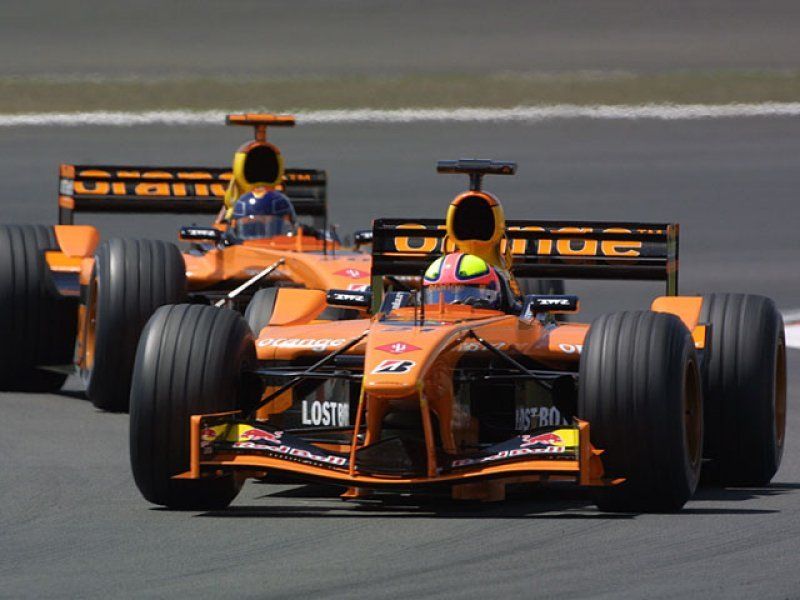
Every motorsport story has two tracks running side by side. One is the obvious one—the fight for championships, the engineering battles, the split‑second choices. The other is the quieter, deeper track: how you build, steer, and sustain a high‑performance organisation through uncertainty.
My second conversation with PJ Stephens was really about that second track. We talked less about race wins and more about how teams learn, adapt, communicate, and make decisions—particularly when the world throws the unexpected at you.
This post unpacks some of those ideas with a little more breathing room.
Racing has always been a mix of intuition and structured thinking for me. From Formula Fords in Australia to working alongside Adrian Newey and Mike Coughlan at McLaren, to creating Super Aguri in 100 days, to winning championships with DS Techeetah, the through‑line has never been a straight line.
It’s been a series of small bets, rapid decisions, and a willingness to move before the path is fully visible.
That mindset—somewhere between entrepreneurial and engineering—is what allowed me to move from F1 to electric powertrains to autonomous vehicles, and eventually into founding StreetDrone. The world changes fast. You either build with that change or you try to outrun it, and the latter rarely works.
During the early months of the pandemic, scenario planning became essential. Not because it gave us certainty—it didn’t—but because it created psychological stability.
What mattered wasn’t predicting exactly what would happen. What mattered was preparing thinking that prevented panic and reduced guesswork. Scenario planning is really just structured curiosity: What if the world looked like this? What would we do?
Motorsport thrives on speed and clarity, but in these moments you survive through flexibility.
One line from PJ stood out: when there’s a vacuum of information, people fill it.
That is true everywhere—in race teams, in startups, and in global businesses. During the crisis, we over‑communicated deliberately. Regular updates to partners, drivers, sponsors, engineers—anyone who had a stake in what happened next.
The Santiago race collision PJ and I discussed was a perfect metaphor. Two drivers, working from incomplete information, made completely rational decisions—based on incorrect assumptions. The result was chaos.
That’s what miscommunication does. It manufactures failure.
One of the simplest leadership habits I’ve carried for years is this: after you communicate something important, ask the person to explain back what they believe they heard.
It isn’t patronising—it’s quality control.
In high‑speed environments, you don’t want compliance. You want clarity. Those aren’t the same thing.
Whether it’s drivers discussing race strategy, engineers interpreting constraints in software, or partners interpreting sponsorship expectations—alignment happens only when both sides confirm they’re looking at the same picture.
People don’t always realise how motorsport influences what ends up in their driveway.
Formula E has shifted public perception of EVs from slow, quirky prototypes to intelligent, responsive machines. The acceleration advantage of electric powertrains isn’t theoretical—it’s lived every race weekend.
You don’t win with greenwashing. You win by demonstrating.
Competition accelerates maturity. In EVs, that’s meant:
All of which flows directly into road cars.
People often ask about the “secret sauce” at DS Techeetah. The truth is dull in its honesty: there is no one thing.
But if there is a thread that ties it all together, it’s this: we replaced black‑art thinking with science.
Ron Dennis used to say that a black art is just a cloak for “we don’t know.” He was right. Mature racing environments remove mystique and replace it with measurement.
You don’t guess your way to championships.
You model, test, iterate, and then you trust the work.
I’ve always believed motorsport must remain relevant. Formula E wasn’t created for spectacle alone—it was built as an early proving ground for electrification.
Now, with hydrogen on the horizon and synthetic fuels in development, motorsport again has a responsibility: to be the experimental platform where next‑generation tech gets pushed, stressed, refined.
Racing sits in Technology Readiness Levels 3–6—the fast, messy middle where risk and learning collide. Road cars sit at 8–9, where reliability matters more than iteration.
Without the middle, you don’t get the end.
That’s why I believe motorsport absolutely has a purpose—and why sustainability isn’t a branding exercise but a direction of travel.
One of the stories PJ asked about was launching Super Aguri and getting to the F1 grid in 100 days.
When the goal feels overwhelming, shrink the problem. Progress becomes visible, which keeps teams moving.
Analysis paralysis kills momentum. Colin Powell’s rule applies: if you’re 40–70% confident, make the call.
Shared decisions are useful, but shared responsibility can be dangerous. Leaders must own the final call.
Assumption is the mother of all errors. In racing, assumptions crash cars. In business, they derail projects.
If you have 100 days, you have 100 days. No extensions. You make decisions when the clock says you make them, not when you feel ready.
These aren’t theoretical lessons. They’re survival tools.
If there’s a single theme that ran through this episode, it’s that leadership is not charisma or cleverness.
It’s pattern recognition.
It’s communication.
It’s judgement under pressure.
It’s knowing when to push, when to listen, and when to commit.
Motorsport just makes all of that visible. Every race, every weekend.
What matters most is this: high‑performance teams win because they learn faster than the competition.
And learning comes from clarity, curiosity, and the courage to move—even before the road is perfectly lit.
Full Transcript
# PJ Tips Podcast Episode
## Title
PJ Tips Podcast with DS Techeetah Principal Mark Preston talking winning
on the track and in business
## Podcast
PJ Tips Podcast Leading Business Change
## Published
19 July 2021
## Duration
42 min 57 sec
## Description
PJ Tips Podcast Leading Business Change with Entrepreneur, Businessman
and Formula E Team Principal Mark Preston on winning on and off the
track and translating those lessons into leading business change.
PJ Tips Audio Transcript Number 2
Transcript
00:00:13 Paul Stephens
Good morning, my name is Paul Stephens.
00:00:16 Paul Stephens
I’m with my PJ Tips podcast this morning, Leading Business Change, with the exceptional Mark Preston, perhaps best known for being principal of the double world championship-winning Formula E team, DS Techeetah.
00:00:29 Paul Stephens
And actually behind that sits half a dozen businesses or so that Mark runs in an extensive portfolio around autonomous tech.
00:00:39 Paul Stephens
remotely operated trucks, sustainable powered vehicles.
00:00:42 Paul Stephens
In fact, there’s a significant amount.
00:00:44 Paul Stephens
So just in a second, I’m going to ask Mark to introduce himself.
00:00:46 Paul Stephens
But there are two comments I wanted to make, not from myself, from other people.
00:00:51 Paul Stephens
One, when I asked somebody, they referred to Mark as a genius.
00:00:56 Paul Stephens
And somebody else said the most dynamic out-of-the-box thinker they’d worked with.
00:01:01 Paul Stephens
So with that introduction over, Mark, perhaps you give us a more detailed overview of your career, sir?
00:01:07 Mark Preston
Yes, good morning.
00:01:09 Mark Preston
Good to join you.
00:01:10 Mark Preston
Yeah, so, well, I started a long time ago in Australia in Formula Fords.
00:01:17 Mark Preston
I started in racing cars.
00:01:18 Mark Preston
I worked for GM at the same time as I was running a small racing car business called Spectrum Racing Cars, which is still running, and I think they’ve won many of the Walter Hayes trophies in the UK over the last 20 years, and also continued to win championships in Australia and other places around the world in Formula Fords.
00:01:38 Mark Preston
I worked at GM and then I decided that I needed to come over to the UK to do Formula One and so came over in 96 and worked for Tom Walkinshaw at Arrows Grand Prix.
00:01:49 Mark Preston
I did that for many years until sadly they closed down and I then moved on to McLaren, which was an interesting couple of years working with Adrian Newey, Mike Coughlin, Neil Oatley and people like that.
00:02:03 Mark Preston
Fascinating to work at McLaren.
00:02:06 Mark Preston
I then decided that I wanted to start my own Formula One team, and I went off and did an MBA at Oxford at the same time while we were sort of trying to do that, and eventually came together with Aguri Suzuki, Honda, Bridgestone, and a few others from Arrows, and started Super Aguri, which was an incredible ride in 2005 through to 2008.
00:02:30 Mark Preston
Again, at 2008, Honda pulled out of the Formula One and we had to shut down Super Eury because of the financial crash.
00:02:39 Mark Preston
And then I started to look at startups around motor racing and what I thought was the future and got involved in spinning out a company of Oxford University called Oxford Yasa Motors, which is still going, which got me interested in electric motors, electric cars, et cetera.
00:02:57 Mark Preston
I started looking at electric
00:03:00 Mark Preston
racing at that time with actually David Hunt, who was James Hunt’s brother.
00:03:05 Mark Preston
And we did our first sketch way back in 2009, which I did actually keep a picture of, which is quite funny in one of my journals, which we actually did call it for Marie when we were doing our sketches.
00:03:16 Mark Preston
And over the next few years, I was actually, you know, involved in a couple of other startups to do with composites, manufacturing and other things.
00:03:24 Mark Preston
And then the FIA put out a tender for
00:03:29 Mark Preston
the new Formula E, and I pitched for that.
00:03:33 Mark Preston
I didn’t win that one, but Alejandro Agag did, and he had a total plan for everything, and he started Formula E.
00:03:42 Mark Preston
And again, I sort of put my hand up and said, Can I have a team?
00:03:47 Mark Preston
And he said, If you can bring Aguri from Japan again, because we thought, you know, we might be able to get Honda to join, then you can have a team at the beginning.
00:03:56 Mark Preston
So, we started as Team Aguri, and
00:03:59 Mark Preston
sort of progressed along the way.
00:04:01 Mark Preston
At one point, we sold to a company in China called Sika.
00:04:06 Mark Preston
And eventually, we’ve now become DS to Cheetah.
00:04:09 Mark Preston
And as you say, we’ve won the last three drivers and two teams championships in Promodary and currently in season 7, heading towards the last races of the season.
00:04:20 Mark Preston
In a good position, probably, for that sort of thing.
00:04:24 Mark Preston
And at the same time,
00:04:26 Mark Preston
Myself and one of my old friends looked at autonomous vehicles and started a company called Street Drone, which manufactures autonomous vehicles and now is getting more into last mile deliveries in trucks and in normal deliveries to houses.
00:04:44 Mark Preston
So that’s it in a nutshell.
00:04:45 Paul Stephens
Just tell us a little bit more about last mile deliveries, if you would.
00:04:51 Mark Preston
Yeah, sure.
00:04:52 Mark Preston
So we’re doing a big truck up at Sunderland, Nissan Sunderland plant.
00:04:56 Mark Preston
And I suppose that’s either first or last, depending on how you see it.
00:05:00 Mark Preston
There’s always a bit of a definition thing there because we basically, this truck is going to pull big HGV trailers from the suppliers or the supply chain around the Nissan manufacturing plant.
00:05:15 Mark Preston
to the main plant and back again, obviously, to reload.
00:05:18 Mark Preston
So you could say that’s kind of first mile, i.e.
00:05:22 Mark Preston
it’s the first mile in the journey of an assembled car.
00:05:25 Mark Preston
Or you could say it’s last mile because it’s last mile deliveries to the assembly plant.
00:05:31 Mark Preston
We’re focusing on low-speed vehicles, so less than 20 miles an hour.
00:05:35 Mark Preston
The same is true, we’re looking at, we also manufacture a small vehicle based on the Renault Twizzy.
00:05:41 Mark Preston
which is a small, in America, they’re called neighborhood electric vehicles.
00:05:47 Mark Preston
But we’re working on making a last mile delivery there.
00:05:50 Mark Preston
And again, that could be called first mile as well, because if you recognize that, you know, most of us, when we get something from Amazon, there’s a lot of returns as well.
00:06:00 Mark Preston
So you can say it’s
00:06:02 Mark Preston
last mile, i.e.
00:06:02 Mark Preston
delivered to your house, but it could also be first mile as you send something back or you, send something to be recycled or something of the type.
00:06:11 Mark Preston
So that’s why we call it first and last mile, but specifically low speed vehicles.
00:06:19 Paul Stephens
Thanks, Mark.
00:06:19 Paul Stephens
And that’s, I suspect that might be a topic for another podcast, actually, because I’m fascinated by that.
00:06:25 Paul Stephens
My first and last mile just locally is on my
00:06:30 Paul Stephens
scooter, not an electric scooter, just a scooter because I can move around within a mile of where we live much faster, you know, than a vehicle.
00:06:36 Paul Stephens
Sure, I can’t do 20 miles an hour, but I think we certainly need to pay attention to that, how we, not just from parcel delivery, but from, you know, passenger movement, people movement within that, within towns and cities.
00:06:49 Paul Stephens
Certainly, it’s a fascinating topic.
00:06:51 Paul Stephens
Can I ask, just given the, you know, like it’s a bit of an old, bit of a perhaps an old hat question, but
00:06:57 Paul Stephens
given the upheaval of the last 18 months, and given that you’re, leading a Formula E team and saying, and half a dozen businesses and startups, how have you managed to lead through the, I guess the chaos or trauma of the last 18 months?
00:07:15 Mark Preston
I mean, when everything actually kicked off, have you done much on the concept of scenario planning?
00:07:21 Mark Preston
Have you looked at that before?
00:07:24 Paul Stephens
I have.
00:07:24 Paul Stephens
Do you want to tell us a bit more about it?
00:07:25 Paul Stephens
Because
00:07:26 Paul Stephens
Because I think there’s one thing about the theory of it, there’s something else about the practical leadership of it.
00:07:31 Paul Stephens
So do you want to talk us through it?
00:07:33 Mark Preston
Yeah, so scenario planning, I think, came to the fore when Shell looked at this in the 70s, when there was an oil crisis.
00:07:41 Mark Preston
And they started to look at things and try to figure out what didn’t they and didn’t they know about the future and why weren’t they prepared?
00:07:49 Mark Preston
So when things kind of started to become clear that we didn’t know what the future was,
00:07:55 Mark Preston
we started to sort of map down, we put it a high, medium and low case.
00:08:00 Mark Preston
So you sort of say, what’s the best and what’s the worst things that could possibly happen?
00:08:05 Mark Preston
And so I think as our worst case, we said, you know, what if we hit the place for another year?
00:08:10 Mark Preston
And our best case was that we could race within sort of a month or two of the whole thing starting to become clear.
00:08:18 Mark Preston
And by having that mapped out and mapping out thoughts on what we would do in each,
00:08:25 Mark Preston
in each eventuality, it makes it easier to sort of think through things.
00:08:29 Mark Preston
So things aren’t a surprise because you sort of start to say, well, that was our worst case was this, and if that had happened, we wouldn’t have to do XYZ, and we were kind of then to maybe have to do that.
00:08:41 Mark Preston
It turns out, I think often you get it right when you get the medium case where you can say, well, it wasn’t the worst, it wasn’t the best, but we did think through a lot of the things that could happen.
00:08:53 Mark Preston
And we were ready for many of them, not all of them, because obviously this was new to everybody, but at least we did we did think through things and that sort of helped me Michael to understand what we could do and what we might have planned to be ready for.
00:09:09 Paul Stephens
Thank you.
00:09:10 Paul Stephens
But just a little bit more on that, because when you’re, you know, you’re leading, say, you know, a double world championship, you know, Formula winning Formula E team,
00:09:18 Paul Stephens
you’re leading across, sponsors, teams, drivers, many cultures.
00:09:23 Paul Stephens
I mean, it’s a global, it’s a global business.
00:09:26 Paul Stephens
How did you, how do you, there’s two questions really, how do you lead normally across those cultures and balance, so you know, the relationships with sponsors and drivers and so on.
00:09:38 Paul Stephens
But, and then how did you, know, how did you include them in your kind of situational planning or, you know, change programme last year, given what you were going through?
00:09:49 Mark Preston
I think an old comment that a colleague of mine said, when things are unclear or there’s a vacuum of information, people make it up.
00:09:59 Mark Preston
So most of it is to do with communication and letting everybody know where we think things are up to.
00:10:07 Mark Preston
So regular communication, because if you don’t get any information, most people make it up.
00:10:12 Mark Preston
And I think that’s where rumor and hearsay and theories and
00:10:17 Mark Preston
conspiracy theories come from us because there’s not enough information.
00:10:20 Mark Preston
So people fill in the blanks however they feel necessary, they want to make up things.
00:10:25 Mark Preston
So I think communication is pretty much key in any situation.
00:10:30 Mark Preston
In fact, when things don’t go right, it’s often because of some sort of miscommunication or lack of communication.
00:10:37 Mark Preston
A good example is on the racetrack when two of our drivers, our two drivers had
00:10:43 Mark Preston
coming together at one of the races that keeps getting replayed in Santiago about two or three years ago, most of the reasoning behind that was because the guy behind thought the guy in front was too slow.
00:10:55 Mark Preston
But they were both targeting a different lap.
00:10:58 Mark Preston
We’d had a complete breakdown in communications of the cars because of power outage in the pit lane.
00:11:05 Mark Preston
And so most of the misunderstanding came because
00:11:09 Mark Preston
they thought, the guy in front must be really slow.
00:11:13 Mark Preston
And the guy in front was saying, why is he attacking me so much?
00:11:16 Mark Preston
He’s going to run out of battery.
00:11:17 Mark Preston
But really, they’d both been targeting two different things.
00:11:20 Mark Preston
And as soon as the systems came back up again, we checked which lap they’re on and said, okay, calm down.
00:11:26 Mark Preston
You’re looking at one lap longer and you’re looking at one lap shorter.
00:11:29 Mark Preston
The actual answer is this.
00:11:31 Mark Preston
And of course, they then settled down into the final two or three laps.
00:11:36 Mark Preston
But that was a miscommunication that happened on the
00:11:39 Mark Preston
on the track just because the communication has broken down.
00:11:41 Mark Preston
So I think that’s a good example, on track.
00:11:45 Paul Stephens
Thank you.
00:11:46 Paul Stephens
And just, I mean, the last couple of days I’ve been interviewing some senior leaders of a business and six out of seven of them have all cited communication issues in the business is one of the most, perhaps one of the
00:11:58 Paul Stephens
areas of risk that they’ve identified.
00:12:01 Paul Stephens
And yet, we all talk about communication, but it’s still so important.
00:12:05 Paul Stephens
And yet to some degree, we don’t seem to have kind of improved it or gotten our, really kind of gotten our heads around it.
00:12:12 Paul Stephens
So from a leader’s perspective, how do you check the quality of communication?
00:12:17 Mark Preston
Well, you know, some people say that communication, it’s okay if it’s one-sided, you know, I’m telling you something, but unless you listen, it doesn’t get through, does it?
00:12:25 Mark Preston
So it’s a two-way process.
00:12:27 Mark Preston
So in some ways, you’ve got to say, I’m going to do this.
00:12:30 Mark Preston
And then I have to ask you, what did you expect me to, what are you expecting me to do?
00:12:35 Mark Preston
So that I check whether or not the actual communication got through.
00:12:39 Mark Preston
So I can’t remember who’s saying that was, but certainly communication is, you know, two-sided.
00:12:46 Mark Preston
It has to get through.
00:12:47 Mark Preston
It has to be listening and communication.
00:12:50 Mark Preston
Otherwise, it’s not really communication, I suppose.
00:12:54 Paul Stephens
True.
00:12:54 Paul Stephens
Just message sharing and you don’t know if it’s been taken on board or going to be actioned.
00:12:57 Paul Stephens
Yeah, exactly.
00:12:59 Paul Stephens
No, cool.
00:13:00 Paul Stephens
Can I ask, in terms of Formula E, who are your, and I’m not sure if you use this word, but who are your customers in Formula E?
00:13:07 Paul Stephens
Okay, perhaps a better one then.
00:13:08 Paul Stephens
Who does Formula E serve and who does DS to Cheetah serve?
00:13:16 Mark Preston
Yeah, so I suppose the team’s customers at the end of the day are its sponsors as one level.
00:13:21 Mark Preston
So that’s the kind of B2B relationship.
00:13:24 Mark Preston
And then the other customers are the B2C, i.e.
00:13:28 Mark Preston
the fans that want to watching the racing, because that’s also the customers of our B2B partners.
00:13:36 Mark Preston
So yeah, there’s probably two types of customers.
00:13:39 Mark Preston
There’s, as I say, B2B and that is other, you know, partners that are associated with, let’s say, the car company with DS.
00:13:48 Mark Preston
But DS is looking to talk to their customers, which are obviously consumers and sometimes businesses who are potentially buying cars for fleets and those kind of things.
00:13:56 Mark Preston
So we’ve got two sort of levels of customer.
00:14:01 Paul Stephens
And do you, I’d be curious to what sort of level our customers, maybe the broader customer, so me, the public, how much are we influenced in perhaps our car buying or product buying by race teams or the success of race teams such as you?
00:14:19 Mark Preston
I think you need to showcase things.
00:14:21 Mark Preston
I mean, if I go back to, that timeline I said before, in 2009, I don’t know if you remember there was this Top Gear Hammerhead Eagle Eye Thrust, because I keep remembering the name, because I keep using it as an example.
00:14:36 Mark Preston
That’s what Top Gear did on the, you know, on their show, and it was this crazy electric car that they drove around Oxfordshire at like 4 miles an hour or something.
00:14:45 Mark Preston
When you think about that was what people thought of an electric car back in 2009, coming through to some of the latest cars.
00:14:54 Mark Preston
I mean, I drive a DS3, so it’s an electric B-segment SUV.
00:15:01 Mark Preston
Not to convince people that they should drive them, but at least convincing them that there are options now.
00:15:09 Mark Preston
Back in 2009,
00:15:11 Mark Preston
I don’t even know what options were available.
00:15:13 Mark Preston
Maybe there was an Nissan Leaf that had a fairly small range, I imagine.
00:15:18 Mark Preston
Maybe a Renault Twizzy and a few other different vehicles.
00:15:20 Mark Preston
But now there’s a huge array of vehicles, everything from the DSs through to Peugeots, Opels, Porsches, Mercedes, et cetera.
00:15:31 Mark Preston
There’s such a selection.
00:15:32 Mark Preston
I think what Formula E does is it shows that the technology is viable, valid,
00:15:39 Mark Preston
early adopters can, follow the racing and can spread the word that, EVs are not any more milk floats as they used to be called in the old days.
00:15:50 Mark Preston
They’re now proper serious vehicles.
00:15:51 Mark Preston
And in fact, we’re getting to a point where you’ll notice that most very high-end sports cars that are hybrid have to have electric parts to the powertrain, otherwise you can’t get the north to 100 times because only with an electric motor,
00:16:08 Mark Preston
can you get so much torque from zero?
00:16:11 Mark Preston
Well, instead of being, unless you’re going to use obviously an F1 engine, but they’ve also got electric elements to the hybrid system in order to get the off-the-line torque.
00:16:21 Mark Preston
So I think all in all, motor racing helps to improve the breed, obviously, through competition, but also to show the early adopters what can be done with an electric vehicle.
00:16:39 Paul Stephens
And certainly your piece about, acceleration, all that sort of, early on power when you just, dump a, or it’s almost like releasing A throttle.
00:16:47 Paul Stephens
It’s almost like not pressing a throttle, but when you release a throttle on some of these five, 600 horsepower, or, you know, the equivalent rd cars, you know, I’m thinking of the Tesla, for example.
00:16:58 Paul Stephens
I mean, that’s, I mean, that’s blisteringly quick.
00:17:00 Paul Stephens
I think they call it ludicrous, or there’s a ludicrous button, but it’s blisteringly quick.
00:17:04 Paul Stephens
And yes, our Nissan Leaf doesn’t have the
00:17:07 Paul Stephens
the longest range.
00:17:08 Paul Stephens
I think perhaps it’s a little bit, it’s only a couple of years old, but it’s probably a little bit out of date in terms of technology, but even that can pick up its skirts and kind of get on with it a bit.
00:17:17 Paul Stephens
But it’s surprisingly comfortable, which I hate to admit, but through, but I do, I know it’s sort of wrong, but there’s something, there’s something that I don’t want to like it, but I do like it.
00:17:28 Paul Stephens
And I’ve mentioned to you before that, you know, I think it’s the DS7, the E-tent.
00:17:33 Paul Stephens
A few years ago, I never would have looked at that car.
00:17:35 Paul Stephens
or consider.
00:17:36 Paul Stephens
And now I’ve got a real hankering for one, partly because of, I think the brand and actually that has come out of Formula E.
00:17:43 Paul Stephens
So I guess what I’m answering my own question, I’m a sucker for racing and I am in, I’m influenced.
00:17:49 Paul Stephens
I hope that doesn’t make me shallow, perhaps just influenceable.
00:17:53 Paul Stephens
So listen, back to, if we can, a bit more little, you know, a bit more about business and your business success.
00:17:59 Paul Stephens
Over the many years, how have you gone about creating an environment
00:18:05 Paul Stephens
that has allowed you and others to be so successful.
00:18:10 Paul Stephens
And we can say that because you are double, world champions, three times drivers champions.
00:18:15 Paul Stephens
So, and I’m assuming you carry that on to business.
00:18:18 Paul Stephens
So what is it that you do or create when it comes to the environment?
00:18:23 Mark Preston
I mean, one of the things I learned going, there was two things I, big learning things I learned.
00:18:28 Mark Preston
I started at Arrows and Tom Mochenshaw, I would say, was very entrepreneurial in his approach to things.
00:18:36 Mark Preston
he would let you do anything you wanted in order to make Pelico faster.
00:18:40 Mark Preston
But at the same time, then I went to McLaren, and I always use this particular quote by Ron Dennis, where he sort of says, when he came into racing, things were a black art.
00:18:52 Mark Preston
And if you’ve ever been involved in racing in the early days, or when you get out of Formula One into other series below Formula E and Formula One,
00:19:00 Mark Preston
There’s a lot of, he says, a blackout was a cloak for we really don’t know.
00:19:05 Mark Preston
It was intuitive engineering.
00:19:07 Mark Preston
So he decided to make it a science.
00:19:08 Mark Preston
And I do believe that is a really key element is to have a deep understanding of what makes your, in motor racing, what makes a car go fast, for example.
00:19:20 Mark Preston
So I’ve done a lot of work on 1st order performance variables, second orders.
00:19:25 Mark Preston
You know, what really makes a car go fast?
00:19:27 Mark Preston
And
00:19:29 Mark Preston
That is, in Formula E, it’s definitely a large amount driver, obviously the actual vehicle itself.
00:19:37 Mark Preston
But then there’s a lot of things just to do with, in the military, they call it tactics, techniques and procedures.
00:19:44 Mark Preston
So I once did something with the MOD and they were saying that, survivability in the field is not just about what armour you’re using, it’s also about how you go about what you’re doing.
00:19:58 Mark Preston
So there’s a lot of parallels you can take from different industries.
00:20:02 Mark Preston
But the basis for me is that you need to have a deep understanding, go through it in a logical way.
00:20:09 Mark Preston
It’s not just about having the fanciest equipment.
00:20:12 Mark Preston
You do have to have a big team around it.
00:20:15 Mark Preston
And so, you know, people often say, what’s your secret sauce from the E?
00:20:19 Mark Preston
And for me, it’s the total package.
00:20:21 Mark Preston
You have to have the best drivers, the best engineers,
00:20:24 Mark Preston
the best organisation.
00:20:25 Mark Preston
You need to pay the bills at the right time.
00:20:27 Mark Preston
You need to have the right amount of money to do the job.
00:20:30 Mark Preston
You need to have the right understanding.
00:20:32 Mark Preston
You need to be organised and run projects in a correct way.
00:20:37 Mark Preston
So it’s not just one thing, it’s multiple things.
00:20:43 Paul Stephens
When you, know, we’re talking about winning here, so that’s, you know, that’s winning on the track.
00:20:49 Paul Stephens
It’s points, you know, points make prizes and all that stuff.
00:20:53 Paul Stephens
But we hear particularly things like Formula E, teams or perhaps Formula E themselves talking about purpose.
00:21:01 Paul Stephens
And maybe we discuss whether that’s purpose with a small P or purpose with a capital P.
00:21:07 Paul Stephens
But how do you, know, what is the purpose of motor racing, I guess, and how do you balance this purpose around sustainability with winning?
00:21:19 Mark Preston
Yeah, that’s an interesting word, isn’t it?
00:21:20 Mark Preston
I mean, at a
00:21:22 Mark Preston
I suppose at top level, motor racing is about winning, ’cause we are competing it’s a competition, but I do…
00:21:30 Mark Preston
I do think that, as I said before, competition improves the breed.
00:21:35 Mark Preston
One of the comments or discussions I’ve had with someone recently was, you know, when you look at Tour de France, obviously the bike riding race, when you look at people in the Peloton, so in the leading pack, there’s, I think, a general understanding that if you weren’t, if you didn’t have all the people with you, wouldn’t be able to stay with the Peloton.
00:21:59 Mark Preston
And in some ways, competition drives things forward faster.
00:22:07 Mark Preston
Have you ever looked at technology readiness levels from NASA?
00:22:12 Paul Stephens
Yeah, go on.
00:22:13 Mark Preston
Yeah.
00:22:14 Mark Preston
So one of the things I think is that we operate in kind of level sort of three to six, somewhere in that range where
00:22:23 Mark Preston
We’re doing technology demonstrators, basically.
00:22:26 Mark Preston
We can take more risk than a road car manufacturer because on the road, they have to design a car for 15, 20 years on the road.
00:22:33 Mark Preston
So they have to be very, very careful when they design something because it’s got to be out there in the world for so long.
00:22:39 Mark Preston
In F1, for example, you can change things every race or a lot of things every race.
00:22:45 Mark Preston
In Formula E, to reduce our budgets, we don’t, we only, you can homologate the powertrain every year.
00:22:52 Mark Preston
although you can make changes if there are any safety or quality concerns.
00:22:57 Mark Preston
But software can change every race.
00:22:59 Mark Preston
So it’s a fast-paced development area.
00:23:04 Mark Preston
And as I say, we run in this technology readiness levels.
00:23:07 Mark Preston
I think it’s level 5, which is technology demonstrator.
00:23:10 Mark Preston
So in a lot of ways, I would say we do technology demonstrators and the competition driven by competing with others.
00:23:19 Mark Preston
makes the product better and it happens at a faster rate than it would do if it was just in an R&D department, maybe in university or something.
00:23:30 Mark Preston
So I think motorsport drives the technology forward at a greater speed and that’s in showcases that technology to make it viable for the outside world and also helps to mature things.
00:23:47 Mark Preston
So for example, in Pulmonary at the beginning, we had five-speed gearboxes.
00:23:52 Mark Preston
And when we were starting to look at Pulmonary before BFIA did their tender, or quite like when we was looking at their tender, we weren’t sure whether or not the ultimate answer would have been five-speed, quick-speed, quick-shift gearboxes like in Formula One with a certain type of motor.
00:24:10 Mark Preston
Now you wind forward eight years,
00:24:13 Mark Preston
and everybody’s got very similar or closer together than they were.
00:24:18 Mark Preston
And so what happens there is that if you’re doing a road car, you can say, well, in racing, in this format, the most successful answer has been this.
00:24:29 Mark Preston
So I will put that into my road car, or I’ll be more confident in choosing that for my road car because the racing has gone through lots of iterations quickly and come to this conclusion that
00:24:40 Mark Preston
this format of car setup is the right way to go.
00:24:44 Mark Preston
So motor racing can help drive the technology, but it also helps to show the public, the buying public, this particular setup works well for a car.
00:24:57 Paul Stephens
And that, you know, when you were just talking about that sort of risk and innovation piece and the different levels, just two things sprung to mind for me.
00:25:02 Paul Stephens
One is almost the opposite of that, not, you know, perhaps a bit harsh, but almost the opposite of that in, say, the marine industry.
00:25:09 Paul Stephens
where perhaps it’s the owner of the yacht or the boat that’s taking some of the risk and, trialling the technology, because often boats are one-off or they’re very few.
00:25:21 Paul Stephens
So it tends to be a bit like a cottage industry.
00:25:23 Paul Stephens
I don’t know many owners that have had boats where things haven’t gone wrong.
00:25:27 Paul Stephens
And yet, you know, we get in cars now, even the lower level cars,
00:25:31 Paul Stephens
And, they, on the whole, they never go wrong.
00:25:34 Paul Stephens
they’re tried and tested to such a degree.
00:25:37 Paul Stephens
It would be very interesting.
00:25:38 Paul Stephens
I think maybe Tesla do it, but that thing you just said about the software updates, your cars don’t, the software does.
00:25:45 Paul Stephens
Perhaps soon we’ll just, you know, I’ll just be, I’ll have a car, I’ll just kind of plug it in, it’ll just kind of get updated, maybe even serviced, you know, through software.
00:25:53 Paul Stephens
I don’t know, it’d be quite an exciting time, I think, to, when that starts coming onto our driveways.
00:26:00 Mark Preston
Yeah, I think that’s the big thing, isn’t it?
00:26:02 Mark Preston
Because if there’s something learned from the racetrack, for example, about how maybe to drive a car and use it for energy management, I can see a time when there’ll be updates, well, to the, for example, the charging, the way you charge the car, behind the scenes, it’s not just full power into the vehicle.
00:26:22 Mark Preston
There are maps and other things where the
00:26:25 Mark Preston
the charger maybe ramps in slow at the beginning, monitors temperature, all those kind of things.
00:26:31 Mark Preston
But if over time we learn things in racing, we can pass those through to rd cars.
00:26:36 Mark Preston
Maybe there’s some elements of the way we charge cars that could be over the air updated to the rd car.
00:26:44 Paul Stephens
Do you think, just talking about charging cars, do you think the future is in
00:26:50 Paul Stephens
electric rechargeable cars?
00:26:52 Paul Stephens
Are we going to be looking at synthetic fuels or what’s your view on that?
00:26:55 Paul Stephens
What are you doing?
00:26:57 Mark Preston
I certainly am interested in the sustainability of motor racing because someone actually said to me, what’s my purpose at one point?
00:27:03 Mark Preston
And one of the reasons I did go looking at Formula E was to see what was the sustainable future of motorsport.
00:27:11 Mark Preston
I think if you look at there was a tweet that I think Elon Musk did a little while back.
00:27:17 Mark Preston
where the city didn’t believe in hydrogen.
00:27:22 Mark Preston
I think there’s a chart that shows that direct electrification, what I mean by that is you’ve got solar panels, the electric power goes straight into an electric car, let’s say, through the grid.
00:27:33 Mark Preston
You’re up in the sort of 80% range when you go from kind of the solar rays hitting the solar panels to the cars moving.
00:27:42 Mark Preston
That’s a very high efficiency
00:27:44 Mark Preston
system.
00:27:45 Mark Preston
So in things like cities, I do believe that direct electrification will be the key because it is the most efficient way of doing taking energy from renewables through to movement, let’s say.
00:28:00 Mark Preston
But there are a lot of things still in the world that where that’s not true.
00:28:07 Mark Preston
So aircraft, one probably answer where in the end we’ll probably be using
00:28:12 Mark Preston
synthetic fuels because of the energy density of a synthetic fuel.
00:28:16 Mark Preston
Now, the efficiency converting from renewable energy to a synthetic fuel is quite low at the moment, but there’s a lot of research going on to increase that efficiency.
00:28:30 Mark Preston
So I can see that efficiency will increase.
00:28:33 Mark Preston
You can see that Porsche is doing some work down in South America where there’s an excess supply of wind power.
00:28:41 Mark Preston
I think that’s an important word, excess supply of energy.
00:28:46 Mark Preston
Because if you look at a map of where the world’s most wind is, it’s actually along that coast of that coast of Chile.
00:28:52 Mark Preston
So, you know, in that area, they it would be logical that they had a lot of wind energy that was used to create to create these synthetic fuels.
00:29:02 Mark Preston
Same is true of Australia.
00:29:03 Mark Preston
So I’m from Australia and you’re out in the middle of Australia, you can see that you could have vast solar farms that would be converting
00:29:12 Mark Preston
you’d have to go to the coasts to get the water, obviously.
00:29:15 Mark Preston
But the electricity could be used to convert to hydrogen, which most likely gets converted to ammonia.
00:29:23 Mark Preston
And ammonia is a good way of transferring or transporting energy to another country.
00:29:28 Mark Preston
So a country like Japan, which has a lack of landmass and not many natural resources, will be, you know, they’re a net importer of energy.
00:29:39 Mark Preston
So they’ll probably import
00:29:41 Mark Preston
things like ammonia from Australia, for example.
00:29:44 Mark Preston
So there’s going to be horses to the courses, but I do think in the world’s cities, which are where most people live, direct electrification, i.e.
00:29:53 Mark Preston
battery electrification, is really still being the primary source of transportation.
00:30:00 Paul Stephens
God, thanks, thanks for that insight.
00:30:02 Paul Stephens
And when, and I say that genuinely, because when I, you know, when I kind of first met you and spoke to you, we didn’t
00:30:11 Paul Stephens
we didn’t talk about purpose and yet you bored me over with your sense of purpose.
00:30:18 Paul Stephens
So you might not necessarily stand on the soapbox and kind of, but share it, from that sense.
00:30:29 Paul Stephens
But in the way that you, your being, I’ve always found it, we’ll say right from the start, I was absolutely enthralled by it.
00:30:35 Paul Stephens
And when you talk like that, it’s, you know, it’s incredibly captivating.
00:30:39 Paul Stephens
But
00:30:39 Paul Stephens
And that seems like a deep purpose.
00:30:41 Paul Stephens
My point is, do you think motorsport also has that kind of deep purpose?
00:30:46 Paul Stephens
Or are they just kind of greenwashing it for the sake of still going racing?
00:30:51 Mark Preston
I think it has to be relevant to the future.
00:30:55 Mark Preston
And I did start working a little bit with RoboRace, which is one of the reasons I did get involved in autonomous vehicles, because I could see that’s the next step.
00:31:04 Mark Preston
Does motor racing
00:31:07 Mark Preston
have a purpose?
00:31:08 Mark Preston
I believe so.
00:31:09 Mark Preston
I mean, maybe it’s, there’s always early adopters in something.
00:31:13 Mark Preston
there’s a comment, I think it’s in most sales and marketing that says, early adopters are something like, is it 15% of people?
00:31:21 Mark Preston
So, when you think about it, us in Formula E, we’re the early adopters.
00:31:26 Mark Preston
And the tech, the technology is already spilling over into your senior, the latest LM
00:31:34 Mark Preston
H cars in Le Mans have got a much bigger electric capability.
00:31:39 Mark Preston
You’ll see F1, I believe in the future, will go to more and more electrification of the powertrain.
00:31:45 Mark Preston
I don’t know what percentage they’ll end up at, but they’re going to go more and more electrified, I believe.
00:31:49 Mark Preston
Four wheel drive is super logical because that’s obviously what’s happening in Le Mans and already has been in Le Mans actually already with Toyota and others who have run the LMP1 rules in the past.
00:32:00 Mark Preston
So I think
00:32:02 Mark Preston
There’s always the early adopters.
00:32:04 Mark Preston
I think ourselves and Formula E have made a big step.
00:32:07 Mark Preston
Alejandro and the FI made a big step.
00:32:10 Mark Preston
But you know, that was seven or eight years ago.
00:32:12 Mark Preston
It’s still a long time ago.
00:32:14 Mark Preston
And you could also say that obviously F1 fed into Formula E.
00:32:18 Mark Preston
If Formula One hadn’t done Kurz in 2007 or 8, I think about 9 it was introduced, but it was started the discussions in 2007, I think it was.
00:32:30 Mark Preston
If Formula One hadn’t done
00:32:31 Mark Preston
occurs, maybe we wouldn’t have the base technology ready to go into Formula E back in 2013.
00:32:39 Mark Preston
So actually, F1 pushed forward a long time ago now.
00:32:44 Mark Preston
It’s almost, you know, gosh, that’s 10, 15 years ago.
00:32:48 Mark Preston
And that technology has now, you know, come through all the way through into Formula E.
00:32:54 Mark Preston
And then we’ll push, you know, some of the technology that we’re doing.
00:32:57 Mark Preston
Obviously, you probably know that DS is part of Stellantis.
00:33:01 Mark Preston
and Peugeot is now going into Le Mans, into the new hypercar rules.
00:33:07 Mark Preston
And there’s technology that’s going from their work in Formula E into the Le Mans car.
00:33:13 Mark Preston
And actually, there’s a relationship developing between TECHEETAH and the Peugeot team as well to take over some of the engineering knowledge into Le Mans.
00:33:24 Mark Preston
So there’s a lot of flow through, but yeah, I don’t know how long it’ll be until
00:33:30 Mark Preston
all motor racing is electric or how much of it might be, it could be the classic cars end up being, have synthetic fuel for quite a long time to at least be taking energy from renewable sources.
00:33:45 Paul Stephens
Well, listen, I look forward to seeing how you influence, you know, you personally and your team, how you might influence Le Mans.
00:33:52 Paul Stephens
And therefore, another excuse for me to go back out there because I missed last year.
00:33:56 Paul Stephens
It’s a great, it’s a great boys weekend away, but if you can get behind the scenes and sponsored as I’ve been lucky enough to do so, it’s amazing to get to talk to people about some of the technology they’re using and the materials that are now being employed.
00:34:10 Paul Stephens
So I’ve just got a couple of questions just to wrap up because I’ve just been taking quite a lot of your time.
00:34:14 Paul Stephens
I really do appreciate it.
00:34:16 Paul Stephens
You’ve mentioned some of the leaders you’ve worked with, all the way back to Tom Walkinshaw, which is amazing, and Ron Dennis.
00:34:23 Paul Stephens
Who, perhaps, are some of the business influencers that you’ve worked with or business leaders that you’ve worked with who you would, you know, kind of really rate and who have perhaps mentored you?
00:34:35 Mark Preston
I mean, having worked mostly in motor racing, I think, you know, I worked with Tom Wolf and Shore, and then obviously Adrian, and those guys there, Oguri Suzuki and Honda.
00:34:46 Mark Preston
Honda’s certainly an interesting
00:34:49 Mark Preston
influence on myself from the business side of things.
00:34:52 Mark Preston
I always like reading about what Mr.
00:34:54 Mark Preston
Honda had done in the past and how he’d gone about growing Honda.
00:34:59 Mark Preston
So I’ve sort of a lot of influence from that from my MBA.
00:35:02 Mark Preston
I do a lot of reading.
00:35:04 Mark Preston
You know, having done the MBA, I read the Harvard Business Review a lot, Clayton Christensen and those kind of forward-thinking people.
00:35:12 Mark Preston
I read a lot about strategy from those kind of famous leaders.
00:35:19 Mark Preston
So I do a lot of reading.
00:35:22 Mark Preston
Alejandro obviously done an amazing job to start Formula E and grow it.
00:35:26 Mark Preston
So it’s always fascinating to watch what he’s doing next, you know, with things like extremeing into the future.
00:35:33 Mark Preston
Very interested in entrepreneurship.
00:35:35 Mark Preston
So obviously take interest in people like Elon Musk and others in that field to have done amazing startups and growing businesses worldwide.
00:35:46 Mark Preston
So those
00:35:48 Mark Preston
Majority engineering in my past, but certainly interesting of what’s happening in our commercial.
00:35:58 Paul Stephens
It’s really, I don’t know if you’ve done any, if you’ve looked at any of the leadership stuff over at MIT Sloan, but it’s interesting when you talk because there’s two, you know, from one of their models and let’s face it, everybody’s got to have a full box model if you do an MBA or you’re at uni or something.
00:36:10 Paul Stephens
But, you know, you seem to really combine that, the visionary piece of leadership very, very strongly, coupled with that ability
00:36:18 Paul Stephens
to gather information and make sense of it.
00:36:21 Paul Stephens
Because I see some other leaders that, they’re, they’re OK on vision or they’re, they’re OK on gathering information, but the making sense of it is where you really seem to excel.
00:36:31 Paul Stephens
Is that fair?
00:36:32 Mark Preston
Yeah, I think that’s the that’s one of the biggest tricks I’d say to motor racing is, you know, you’ve got to take in a lot of information and boil it down to what’s important.
00:36:41 Mark Preston
what are the underlying performance drivers?
00:36:44 Mark Preston
What really is going to make the biggest, what are the biggest levers, I suppose?
00:36:48 Mark Preston
And certainly, you know, what is the biggest low-hanging fruit?
00:36:53 Mark Preston
You know, people talk about low-hanging fruit a lot.
00:36:55 Mark Preston
It’s like, where can you have the biggest change?
00:36:57 Mark Preston
And I’ve been Mark Whitmarsh actually at McFarren once brought me on to the idea of the Pareto principle.
00:37:03 Mark Preston
You know, the idea that 80% of the work
00:37:07 Mark Preston
gets, sorry, the first 80% takes 20% of the effort.
00:37:11 Mark Preston
It’s the last 20% that takes 80% of the effort.
00:37:14 Mark Preston
That’s definitely true in motor racing.
00:37:16 Mark Preston
You can get within a second or two of the leaders, but to get the last 20% is the absolute, is the hardest bit to get.
00:37:25 Mark Preston
So yeah, that’s certainly one of the key elements is to break down the project or the job you’re doing and try to understand
00:37:35 Mark Preston
what really has the biggest impact so that you can have the biggest impact on what you do?
00:37:41 Paul Stephens
Thanks.
00:37:41 Paul Stephens
And then the last one, because I’d like just to close from you on just a couple of top tips for our listeners on leading business change.
00:37:50 Paul Stephens
And it may come from, as I said, I’m genuinely hoping that we can come back and do another one.
00:37:57 Paul Stephens
But when you launched or you took Super Aguri to the F1 grid in, was it in Bahrain?
00:38:03 Paul Stephens
And you did that in 100 days, right, while still running another business, doing your MBA and, a bunch of other stuff, right?
00:38:11 Paul Stephens
So how, if you could just take a couple of perhaps top tips, maybe from that time for leaders, how did you manage to lead a new F1 team in 100 days, you know, to the grid?
00:38:23 Mark Preston
Yeah, I think there was one that I remember.
00:38:25 Mark Preston
If you don’t know what to do next, take small steps.
00:38:27 Mark Preston
So break everything down into small steps.
00:38:30 Mark Preston
and plan, that’s certainly a huge thing.
00:38:34 Mark Preston
What are the things that did I find?
00:38:39 Mark Preston
There’s one by Colin Powell that I always think of, the general from the US, where he says, you know, sometimes you’ve actually got to go with your gut.
00:38:47 Mark Preston
So when something’s, when you’re 40 to 70% sure, you’ve got to make a decision.
00:38:51 Mark Preston
Because if you can get into analysis paralysis if you wait too long to make decisions.
00:38:56 Mark Preston
And that’s obviously where the leadership comes into it.
00:39:01 Mark Preston
You need to communicate, as we said early.
00:39:03 Mark Preston
I had an old saying where emails don’t work, because I had some of my guys would actually say, but I sent that person an e-mail.
00:39:11 Mark Preston
And it’s like, yeah, but that doesn’t mean that they got the, they didn’t listen to that answer.
00:39:16 Mark Preston
So clear communication is a huge one.
00:39:21 Mark Preston
I found that you got to be careful of sort of socializing risk.
00:39:24 Mark Preston
And what I mean there is that, you know, everyone says, I thought you’d do the, you’d do the job.
00:39:30 Mark Preston
So you’ve got to be sort of careful that you don’t sort of make it so that everyone makes a decision too much together.
00:39:37 Mark Preston
You’ve got to leave at some point and make the decisions.
00:39:41 Mark Preston
And never assume too much.
00:39:43 Mark Preston
I always say assumption is the mother of all screw-ups, you know?
00:39:46 Mark Preston
So don’t assume anything when you’re under pressure to deliver.
00:39:50 Mark Preston
Because if you assume, oh, I assumed he was going to do it or she was going to do it, that’s kind of what I mean by you socialize the risk and then just assume that everybody’s, someone else has done the job.
00:40:00 Mark Preston
So that was some of the bigger things that I’ve learned.
00:40:05 Mark Preston
I think you’ve got to, there’s another concept they call time boxing, where you’ve sort of got to say, to get something done in 100 days, I think they call it, I have not done sort of agile and sprints, but I think that’s another way of looking at it, where you sort of say, this is the total, you’ve got to get there in 100 days.
00:40:22 Mark Preston
Now break it down into sections.
00:40:24 Mark Preston
Now when you get to the end of a sprint, you have to make your decision.
00:40:28 Mark Preston
There’s no second choice.
00:40:29 Mark Preston
You just have to make a decision, even if you’re not sure it’s quite the right one.
00:40:33 Mark Preston
We had a few examples when we were doing super eguri where people said, but we can’t possibly make that decision.
00:40:39 Mark Preston
It just won’t work.
00:40:40 Mark Preston
And I just have to say, no, we’re doing that.
00:40:42 Mark Preston
And then later on, two months later, people would say, oh, I’m glad you made that decision because we didn’t have got here if you hadn’t made the decision on the time.
00:40:49 Mark Preston
So I think there’s a lot of those sort of concepts.
00:40:52 Mark Preston
And
00:40:52 Mark Preston
It’s interesting.
00:40:53 Mark Preston
I’ve been talking about sort of adding, taking things from my MBA and putting them together with, you know, what we’ve learned in motorsports and kind of making out almost like a motorsports MBA at some point.
00:41:05 Paul Stephens
Well, that’s one, you know, it’s fascinating because you do combine
00:41:15 Paul Stephens
very eloquently that leadership theory or that business theory to, the practical elements of leadership in business, which, and I’ll be honest, I think businesses need the practical elements.
00:41:28 Paul Stephens
They need the, they need the how to, the why to, the, you know, what do I actually need to focus on and get on and do?
00:41:33 Paul Stephens
Because there’s so much theory out there and I genuinely don’t think we need more theory.
00:41:38 Paul Stephens
We need that translation of theory into practical stuff.
00:41:42 Paul Stephens
Tell me what, like feedback, or communication.
00:41:44 Paul Stephens
How do I give and receive better quality feedback so that, you know, how do I check?
00:41:49 Paul Stephens
Because just talking about it doesn’t, you know, doesn’t get things done, feel quite strongly about that.
00:41:54 Paul Stephens
So if we can get you back to talk more about that sort of business piece and perhaps maybe, give us some insights into the motorsport-led MBA, you know, I’d be absolutely delighted.
00:42:07 Paul Stephens
But for…
00:42:08 Paul Stephens
For today, Mark Preston, superstar, thanks so much for joining us and just giving us your insights from your perspective as a transformational leader in tech and startups and motorsport.
00:42:19 Paul Stephens
I don’t know if I can…
00:42:21 Paul Stephens
share everything, but autonomous driving, principle of world champs, DS to cheetah.
00:42:27 Paul Stephens
And as I say, as I go back to when somebody said earlier, just the most incredible out-of-the-box thinker that the person I asked said they’d ever worked with.
00:42:35 Paul Stephens
So this has been me, PJ Stevens, with my PJ Tips podcast on leading business change with, as I say, the absolute superstar Mark Preston.
00:42:43 Paul Stephens
Thanks, Mark.
00:42:44 Mark Preston
Thank you very much.# PJ Tips Podcast Episode
## Title
PJ Tips Podcast with DS Techeetah Principal Mark Preston talking winning
on the track and in business
## Podcast
PJ Tips Podcast Leading Business Change
## Published
19 July 2021
## Duration
42 min 57 sec
## Description
PJ Tips Podcast Leading Business Change with Entrepreneur, Businessman
and Formula E Team Principal Mark Preston on winning on and off the
track and translating those lessons into leading business change.
PJ Tips Audio Transcript Number 2
Transcript
00:00:13 Paul Stephens
Good morning, my name is Paul Stephens.
00:00:16 Paul Stephens
I’m with my PJ Tips podcast this morning, Leading Business Change, with the exceptional Mark Preston, perhaps best known for being principal of the double world championship-winning Formula E team, DS Techeetah.
00:00:29 Paul Stephens
And actually behind that sits half a dozen businesses or so that Mark runs in an extensive portfolio around autonomous tech.
00:00:39 Paul Stephens
remotely operated trucks, sustainable powered vehicles.
00:00:42 Paul Stephens
In fact, there’s a significant amount.
00:00:44 Paul Stephens
So just in a second, I’m going to ask Mark to introduce himself.
00:00:46 Paul Stephens
But there are two comments I wanted to make, not from myself, from other people.
00:00:51 Paul Stephens
One, when I asked somebody, they referred to Mark as a genius.
00:00:56 Paul Stephens
And somebody else said the most dynamic out-of-the-box thinker they’d worked with.
00:01:01 Paul Stephens
So with that introduction over, Mark, perhaps you give us a more detailed overview of your career, sir?
00:01:07 Mark Preston
Yes, good morning.
00:01:09 Mark Preston
Good to join you.
00:01:10 Mark Preston
Yeah, so, well, I started a long time ago in Australia in Formula Fords.
00:01:17 Mark Preston
I started in racing cars.
00:01:18 Mark Preston
I worked for GM at the same time as I was running a small racing car business called Spectrum Racing Cars, which is still running, and I think they’ve won many of the Walter Hayes trophies in the UK over the last 20 years, and also continued to win championships in Australia and other places around the world in Formula Fords.
00:01:38 Mark Preston
I worked at GM and then I decided that I needed to come over to the UK to do Formula One and so came over in 96 and worked for Tom Walkinshaw at Arrows Grand Prix.
00:01:49 Mark Preston
I did that for many years until sadly they closed down and I then moved on to McLaren, which was an interesting couple of years working with Adrian Newey, Mike Coughlin, Neil Oatley and people like that.
00:02:03 Mark Preston
Fascinating to work at McLaren.
00:02:06 Mark Preston
I then decided that I wanted to start my own Formula One team, and I went off and did an MBA at Oxford at the same time while we were sort of trying to do that, and eventually came together with Aguri Suzuki, Honda, Bridgestone, and a few others from Arrows, and started Super Aguri, which was an incredible ride in 2005 through to 2008.
00:02:30 Mark Preston
Again, at 2008, Honda pulled out of the Formula One and we had to shut down Super Eury because of the financial crash.
00:02:39 Mark Preston
And then I started to look at startups around motor racing and what I thought was the future and got involved in spinning out a company of Oxford University called Oxford Yasa Motors, which is still going, which got me interested in electric motors, electric cars, et cetera.
00:02:57 Mark Preston
I started looking at electric
00:03:00 Mark Preston
racing at that time with actually David Hunt, who was James Hunt’s brother.
00:03:05 Mark Preston
And we did our first sketch way back in 2009, which I did actually keep a picture of, which is quite funny in one of my journals, which we actually did call it for Marie when we were doing our sketches.
00:03:16 Mark Preston
And over the next few years, I was actually, you know, involved in a couple of other startups to do with composites, manufacturing and other things.
00:03:24 Mark Preston
And then the FIA put out a tender for
00:03:29 Mark Preston
the new Formula E, and I pitched for that.
00:03:33 Mark Preston
I didn’t win that one, but Alejandro Agag did, and he had a total plan for everything, and he started Formula E.
00:03:42 Mark Preston
And again, I sort of put my hand up and said, Can I have a team?
00:03:47 Mark Preston
And he said, If you can bring Aguri from Japan again, because we thought, you know, we might be able to get Honda to join, then you can have a team at the beginning.
00:03:56 Mark Preston
So, we started as Team Aguri, and
00:03:59 Mark Preston
sort of progressed along the way.
00:04:01 Mark Preston
At one point, we sold to a company in China called Sika.
00:04:06 Mark Preston
And eventually, we’ve now become DS to Cheetah.
00:04:09 Mark Preston
And as you say, we’ve won the last three drivers and two teams championships in Promodary and currently in season 7, heading towards the last races of the season.
00:04:20 Mark Preston
In a good position, probably, for that sort of thing.
00:04:24 Mark Preston
And at the same time,
00:04:26 Mark Preston
Myself and one of my old friends looked at autonomous vehicles and started a company called Street Drone, which manufactures autonomous vehicles and now is getting more into last mile deliveries in trucks and in normal deliveries to houses.
00:04:44 Mark Preston
So that’s it in a nutshell.
00:04:45 Paul Stephens
Just tell us a little bit more about last mile deliveries, if you would.
00:04:51 Mark Preston
Yeah, sure.
00:04:52 Mark Preston
So we’re doing a big truck up at Sunderland, Nissan Sunderland plant.
00:04:56 Mark Preston
And I suppose that’s either first or last, depending on how you see it.
00:05:00 Mark Preston
There’s always a bit of a definition thing there because we basically, this truck is going to pull big HGV trailers from the suppliers or the supply chain around the Nissan manufacturing plant.
00:05:15 Mark Preston
to the main plant and back again, obviously, to reload.
00:05:18 Mark Preston
So you could say that’s kind of first mile, i.e.
00:05:22 Mark Preston
it’s the first mile in the journey of an assembled car.
00:05:25 Mark Preston
Or you could say it’s last mile because it’s last mile deliveries to the assembly plant.
00:05:31 Mark Preston
We’re focusing on low-speed vehicles, so less than 20 miles an hour.
00:05:35 Mark Preston
The same is true, we’re looking at, we also manufacture a small vehicle based on the Renault Twizzy.
00:05:41 Mark Preston
which is a small, in America, they’re called neighborhood electric vehicles.
00:05:47 Mark Preston
But we’re working on making a last mile delivery there.
00:05:50 Mark Preston
And again, that could be called first mile as well, because if you recognize that, you know, most of us, when we get something from Amazon, there’s a lot of returns as well.
00:06:00 Mark Preston
So you can say it’s
00:06:02 Mark Preston
last mile, i.e.
00:06:02 Mark Preston
delivered to your house, but it could also be first mile as you send something back or you, send something to be recycled or something of the type.
00:06:11 Mark Preston
So that’s why we call it first and last mile, but specifically low speed vehicles.
00:06:19 Paul Stephens
Thanks, Mark.
00:06:19 Paul Stephens
And that’s, I suspect that might be a topic for another podcast, actually, because I’m fascinated by that.
00:06:25 Paul Stephens
My first and last mile just locally is on my
00:06:30 Paul Stephens
scooter, not an electric scooter, just a scooter because I can move around within a mile of where we live much faster, you know, than a vehicle.
00:06:36 Paul Stephens
Sure, I can’t do 20 miles an hour, but I think we certainly need to pay attention to that, how we, not just from parcel delivery, but from, you know, passenger movement, people movement within that, within towns and cities.
00:06:49 Paul Stephens
Certainly, it’s a fascinating topic.
00:06:51 Paul Stephens
Can I ask, just given the, you know, like it’s a bit of an old, bit of a perhaps an old hat question, but
00:06:57 Paul Stephens
given the upheaval of the last 18 months, and given that you’re, leading a Formula E team and saying, and half a dozen businesses and startups, how have you managed to lead through the, I guess the chaos or trauma of the last 18 months?
00:07:15 Mark Preston
I mean, when everything actually kicked off, have you done much on the concept of scenario planning?
00:07:21 Mark Preston
Have you looked at that before?
00:07:24 Paul Stephens
I have.
00:07:24 Paul Stephens
Do you want to tell us a bit more about it?
00:07:25 Paul Stephens
Because
00:07:26 Paul Stephens
Because I think there’s one thing about the theory of it, there’s something else about the practical leadership of it.
00:07:31 Paul Stephens
So do you want to talk us through it?
00:07:33 Mark Preston
Yeah, so scenario planning, I think, came to the fore when Shell looked at this in the 70s, when there was an oil crisis.
00:07:41 Mark Preston
And they started to look at things and try to figure out what didn’t they and didn’t they know about the future and why weren’t they prepared?
00:07:49 Mark Preston
So when things kind of started to become clear that we didn’t know what the future was,
00:07:55 Mark Preston
we started to sort of map down, we put it a high, medium and low case.
00:08:00 Mark Preston
So you sort of say, what’s the best and what’s the worst things that could possibly happen?
00:08:05 Mark Preston
And so I think as our worst case, we said, you know, what if we hit the place for another year?
00:08:10 Mark Preston
And our best case was that we could race within sort of a month or two of the whole thing starting to become clear.
00:08:18 Mark Preston
And by having that mapped out and mapping out thoughts on what we would do in each,
00:08:25 Mark Preston
in each eventuality, it makes it easier to sort of think through things.
00:08:29 Mark Preston
So things aren’t a surprise because you sort of start to say, well, that was our worst case was this, and if that had happened, we wouldn’t have to do XYZ, and we were kind of then to maybe have to do that.
00:08:41 Mark Preston
It turns out, I think often you get it right when you get the medium case where you can say, well, it wasn’t the worst, it wasn’t the best, but we did think through a lot of the things that could happen.
00:08:53 Mark Preston
And we were ready for many of them, not all of them, because obviously this was new to everybody, but at least we did we did think through things and that sort of helped me Michael to understand what we could do and what we might have planned to be ready for.
00:09:09 Paul Stephens
Thank you.
00:09:10 Paul Stephens
But just a little bit more on that, because when you’re, you know, you’re leading, say, you know, a double world championship, you know, Formula winning Formula E team,
00:09:18 Paul Stephens
you’re leading across, sponsors, teams, drivers, many cultures.
00:09:23 Paul Stephens
I mean, it’s a global, it’s a global business.
00:09:26 Paul Stephens
How did you, how do you, there’s two questions really, how do you lead normally across those cultures and balance, so you know, the relationships with sponsors and drivers and so on.
00:09:38 Paul Stephens
But, and then how did you, know, how did you include them in your kind of situational planning or, you know, change programme last year, given what you were going through?
00:09:49 Mark Preston
I think an old comment that a colleague of mine said, when things are unclear or there’s a vacuum of information, people make it up.
00:09:59 Mark Preston
So most of it is to do with communication and letting everybody know where we think things are up to.
00:10:07 Mark Preston
So regular communication, because if you don’t get any information, most people make it up.
00:10:12 Mark Preston
And I think that’s where rumor and hearsay and theories and
00:10:17 Mark Preston
conspiracy theories come from us because there’s not enough information.
00:10:20 Mark Preston
So people fill in the blanks however they feel necessary, they want to make up things.
00:10:25 Mark Preston
So I think communication is pretty much key in any situation.
00:10:30 Mark Preston
In fact, when things don’t go right, it’s often because of some sort of miscommunication or lack of communication.
00:10:37 Mark Preston
A good example is on the racetrack when two of our drivers, our two drivers had
00:10:43 Mark Preston
coming together at one of the races that keeps getting replayed in Santiago about two or three years ago, most of the reasoning behind that was because the guy behind thought the guy in front was too slow.
00:10:55 Mark Preston
But they were both targeting a different lap.
00:10:58 Mark Preston
We’d had a complete breakdown in communications of the cars because of power outage in the pit lane.
00:11:05 Mark Preston
And so most of the misunderstanding came because
00:11:09 Mark Preston
they thought, the guy in front must be really slow.
00:11:13 Mark Preston
And the guy in front was saying, why is he attacking me so much?
00:11:16 Mark Preston
He’s going to run out of battery.
00:11:17 Mark Preston
But really, they’d both been targeting two different things.
00:11:20 Mark Preston
And as soon as the systems came back up again, we checked which lap they’re on and said, okay, calm down.
00:11:26 Mark Preston
You’re looking at one lap longer and you’re looking at one lap shorter.
00:11:29 Mark Preston
The actual answer is this.
00:11:31 Mark Preston
And of course, they then settled down into the final two or three laps.
00:11:36 Mark Preston
But that was a miscommunication that happened on the
00:11:39 Mark Preston
on the track just because the communication has broken down.
00:11:41 Mark Preston
So I think that’s a good example, on track.
00:11:45 Paul Stephens
Thank you.
00:11:46 Paul Stephens
And just, I mean, the last couple of days I’ve been interviewing some senior leaders of a business and six out of seven of them have all cited communication issues in the business is one of the most, perhaps one of the
00:11:58 Paul Stephens
areas of risk that they’ve identified.
00:12:01 Paul Stephens
And yet, we all talk about communication, but it’s still so important.
00:12:05 Paul Stephens
And yet to some degree, we don’t seem to have kind of improved it or gotten our, really kind of gotten our heads around it.
00:12:12 Paul Stephens
So from a leader’s perspective, how do you check the quality of communication?
00:12:17 Mark Preston
Well, you know, some people say that communication, it’s okay if it’s one-sided, you know, I’m telling you something, but unless you listen, it doesn’t get through, does it?
00:12:25 Mark Preston
So it’s a two-way process.
00:12:27 Mark Preston
So in some ways, you’ve got to say, I’m going to do this.
00:12:30 Mark Preston
And then I have to ask you, what did you expect me to, what are you expecting me to do?
00:12:35 Mark Preston
So that I check whether or not the actual communication got through.
00:12:39 Mark Preston
So I can’t remember who’s saying that was, but certainly communication is, you know, two-sided.
00:12:46 Mark Preston
It has to get through.
00:12:47 Mark Preston
It has to be listening and communication.
00:12:50 Mark Preston
Otherwise, it’s not really communication, I suppose.
00:12:54 Paul Stephens
True.
00:12:54 Paul Stephens
Just message sharing and you don’t know if it’s been taken on board or going to be actioned.
00:12:57 Paul Stephens
Yeah, exactly.
00:12:59 Paul Stephens
No, cool.
00:13:00 Paul Stephens
Can I ask, in terms of Formula E, who are your, and I’m not sure if you use this word, but who are your customers in Formula E?
00:13:07 Paul Stephens
Okay, perhaps a better one then.
00:13:08 Paul Stephens
Who does Formula E serve and who does DS to Cheetah serve?
00:13:16 Mark Preston
Yeah, so I suppose the team’s customers at the end of the day are its sponsors as one level.
00:13:21 Mark Preston
So that’s the kind of B2B relationship.
00:13:24 Mark Preston
And then the other customers are the B2C, i.e.
00:13:28 Mark Preston
the fans that want to watching the racing, because that’s also the customers of our B2B partners.
00:13:36 Mark Preston
So yeah, there’s probably two types of customers.
00:13:39 Mark Preston
There’s, as I say, B2B and that is other, you know, partners that are associated with, let’s say, the car company with DS.
00:13:48 Mark Preston
But DS is looking to talk to their customers, which are obviously consumers and sometimes businesses who are potentially buying cars for fleets and those kind of things.
00:13:56 Mark Preston
So we’ve got two sort of levels of customer.
00:14:01 Paul Stephens
And do you, I’d be curious to what sort of level our customers, maybe the broader customer, so me, the public, how much are we influenced in perhaps our car buying or product buying by race teams or the success of race teams such as you?
00:14:19 Mark Preston
I think you need to showcase things.
00:14:21 Mark Preston
I mean, if I go back to, that timeline I said before, in 2009, I don’t know if you remember there was this Top Gear Hammerhead Eagle Eye Thrust, because I keep remembering the name, because I keep using it as an example.
00:14:36 Mark Preston
That’s what Top Gear did on the, you know, on their show, and it was this crazy electric car that they drove around Oxfordshire at like 4 miles an hour or something.
00:14:45 Mark Preston
When you think about that was what people thought of an electric car back in 2009, coming through to some of the latest cars.
00:14:54 Mark Preston
I mean, I drive a DS3, so it’s an electric B-segment SUV.
00:15:01 Mark Preston
Not to convince people that they should drive them, but at least convincing them that there are options now.
00:15:09 Mark Preston
Back in 2009,
00:15:11 Mark Preston
I don’t even know what options were available.
00:15:13 Mark Preston
Maybe there was an Nissan Leaf that had a fairly small range, I imagine.
00:15:18 Mark Preston
Maybe a Renault Twizzy and a few other different vehicles.
00:15:20 Mark Preston
But now there’s a huge array of vehicles, everything from the DSs through to Peugeots, Opels, Porsches, Mercedes, et cetera.
00:15:31 Mark Preston
There’s such a selection.
00:15:32 Mark Preston
I think what Formula E does is it shows that the technology is viable, valid,
00:15:39 Mark Preston
early adopters can, follow the racing and can spread the word that, EVs are not any more milk floats as they used to be called in the old days.
00:15:50 Mark Preston
They’re now proper serious vehicles.
00:15:51 Mark Preston
And in fact, we’re getting to a point where you’ll notice that most very high-end sports cars that are hybrid have to have electric parts to the powertrain, otherwise you can’t get the north to 100 times because only with an electric motor,
00:16:08 Mark Preston
can you get so much torque from zero?
00:16:11 Mark Preston
Well, instead of being, unless you’re going to use obviously an F1 engine, but they’ve also got electric elements to the hybrid system in order to get the off-the-line torque.
00:16:21 Mark Preston
So I think all in all, motor racing helps to improve the breed, obviously, through competition, but also to show the early adopters what can be done with an electric vehicle.
00:16:39 Paul Stephens
And certainly your piece about, acceleration, all that sort of, early on power when you just, dump a, or it’s almost like releasing A throttle.
00:16:47 Paul Stephens
It’s almost like not pressing a throttle, but when you release a throttle on some of these five, 600 horsepower, or, you know, the equivalent rd cars, you know, I’m thinking of the Tesla, for example.
00:16:58 Paul Stephens
I mean, that’s, I mean, that’s blisteringly quick.
00:17:00 Paul Stephens
I think they call it ludicrous, or there’s a ludicrous button, but it’s blisteringly quick.
00:17:04 Paul Stephens
And yes, our Nissan Leaf doesn’t have the
00:17:07 Paul Stephens
the longest range.
00:17:08 Paul Stephens
I think perhaps it’s a little bit, it’s only a couple of years old, but it’s probably a little bit out of date in terms of technology, but even that can pick up its skirts and kind of get on with it a bit.
00:17:17 Paul Stephens
But it’s surprisingly comfortable, which I hate to admit, but through, but I do, I know it’s sort of wrong, but there’s something, there’s something that I don’t want to like it, but I do like it.
00:17:28 Paul Stephens
And I’ve mentioned to you before that, you know, I think it’s the DS7, the E-tent.
00:17:33 Paul Stephens
A few years ago, I never would have looked at that car.
00:17:35 Paul Stephens
or consider.
00:17:36 Paul Stephens
And now I’ve got a real hankering for one, partly because of, I think the brand and actually that has come out of Formula E.
00:17:43 Paul Stephens
So I guess what I’m answering my own question, I’m a sucker for racing and I am in, I’m influenced.
00:17:49 Paul Stephens
I hope that doesn’t make me shallow, perhaps just influenceable.
00:17:53 Paul Stephens
So listen, back to, if we can, a bit more little, you know, a bit more about business and your business success.
00:17:59 Paul Stephens
Over the many years, how have you gone about creating an environment
00:18:05 Paul Stephens
that has allowed you and others to be so successful.
00:18:10 Paul Stephens
And we can say that because you are double, world champions, three times drivers champions.
00:18:15 Paul Stephens
So, and I’m assuming you carry that on to business.
00:18:18 Paul Stephens
So what is it that you do or create when it comes to the environment?
00:18:23 Mark Preston
I mean, one of the things I learned going, there was two things I, big learning things I learned.
00:18:28 Mark Preston
I started at Arrows and Tom Mochenshaw, I would say, was very entrepreneurial in his approach to things.
00:18:36 Mark Preston
he would let you do anything you wanted in order to make Pelico faster.
00:18:40 Mark Preston
But at the same time, then I went to McLaren, and I always use this particular quote by Ron Dennis, where he sort of says, when he came into racing, things were a black art.
00:18:52 Mark Preston
And if you’ve ever been involved in racing in the early days, or when you get out of Formula One into other series below Formula E and Formula One,
00:19:00 Mark Preston
There’s a lot of, he says, a blackout was a cloak for we really don’t know.
00:19:05 Mark Preston
It was intuitive engineering.
00:19:07 Mark Preston
So he decided to make it a science.
00:19:08 Mark Preston
And I do believe that is a really key element is to have a deep understanding of what makes your, in motor racing, what makes a car go fast, for example.
00:19:20 Mark Preston
So I’ve done a lot of work on 1st order performance variables, second orders.
00:19:25 Mark Preston
You know, what really makes a car go fast?
00:19:27 Mark Preston
And
00:19:29 Mark Preston
That is, in Formula E, it’s definitely a large amount driver, obviously the actual vehicle itself.
00:19:37 Mark Preston
But then there’s a lot of things just to do with, in the military, they call it tactics, techniques and procedures.
00:19:44 Mark Preston
So I once did something with the MOD and they were saying that, survivability in the field is not just about what armour you’re using, it’s also about how you go about what you’re doing.
00:19:58 Mark Preston
So there’s a lot of parallels you can take from different industries.
00:20:02 Mark Preston
But the basis for me is that you need to have a deep understanding, go through it in a logical way.
00:20:09 Mark Preston
It’s not just about having the fanciest equipment.
00:20:12 Mark Preston
You do have to have a big team around it.
00:20:15 Mark Preston
And so, you know, people often say, what’s your secret sauce from the E?
00:20:19 Mark Preston
And for me, it’s the total package.
00:20:21 Mark Preston
You have to have the best drivers, the best engineers,
00:20:24 Mark Preston
the best organisation.
00:20:25 Mark Preston
You need to pay the bills at the right time.
00:20:27 Mark Preston
You need to have the right amount of money to do the job.
00:20:30 Mark Preston
You need to have the right understanding.
00:20:32 Mark Preston
You need to be organised and run projects in a correct way.
00:20:37 Mark Preston
So it’s not just one thing, it’s multiple things.
00:20:43 Paul Stephens
When you, know, we’re talking about winning here, so that’s, you know, that’s winning on the track.
00:20:49 Paul Stephens
It’s points, you know, points make prizes and all that stuff.
00:20:53 Paul Stephens
But we hear particularly things like Formula E, teams or perhaps Formula E themselves talking about purpose.
00:21:01 Paul Stephens
And maybe we discuss whether that’s purpose with a small P or purpose with a capital P.
00:21:07 Paul Stephens
But how do you, know, what is the purpose of motor racing, I guess, and how do you balance this purpose around sustainability with winning?
00:21:19 Mark Preston
Yeah, that’s an interesting word, isn’t it?
00:21:20 Mark Preston
I mean, at a
00:21:22 Mark Preston
I suppose at top level, motor racing is about winning, ’cause we are competing it’s a competition, but I do…
00:21:30 Mark Preston
I do think that, as I said before, competition improves the breed.
00:21:35 Mark Preston
One of the comments or discussions I’ve had with someone recently was, you know, when you look at Tour de France, obviously the bike riding race, when you look at people in the Peloton, so in the leading pack, there’s, I think, a general understanding that if you weren’t, if you didn’t have all the people with you, wouldn’t be able to stay with the Peloton.
00:21:59 Mark Preston
And in some ways, competition drives things forward faster.
00:22:07 Mark Preston
Have you ever looked at technology readiness levels from NASA?
00:22:12 Paul Stephens
Yeah, go on.
00:22:13 Mark Preston
Yeah.
00:22:14 Mark Preston
So one of the things I think is that we operate in kind of level sort of three to six, somewhere in that range where
00:22:23 Mark Preston
We’re doing technology demonstrators, basically.
00:22:26 Mark Preston
We can take more risk than a road car manufacturer because on the road, they have to design a car for 15, 20 years on the road.
00:22:33 Mark Preston
So they have to be very, very careful when they design something because it’s got to be out there in the world for so long.
00:22:39 Mark Preston
In F1, for example, you can change things every race or a lot of things every race.
00:22:45 Mark Preston
In Formula E, to reduce our budgets, we don’t, we only, you can homologate the powertrain every year.
00:22:52 Mark Preston
although you can make changes if there are any safety or quality concerns.
00:22:57 Mark Preston
But software can change every race.
00:22:59 Mark Preston
So it’s a fast-paced development area.
00:23:04 Mark Preston
And as I say, we run in this technology readiness levels.
00:23:07 Mark Preston
I think it’s level 5, which is technology demonstrator.
00:23:10 Mark Preston
So in a lot of ways, I would say we do technology demonstrators and the competition driven by competing with others.
00:23:19 Mark Preston
makes the product better and it happens at a faster rate than it would do if it was just in an R&D department, maybe in university or something.
00:23:30 Mark Preston
So I think motorsport drives the technology forward at a greater speed and that’s in showcases that technology to make it viable for the outside world and also helps to mature things.
00:23:47 Mark Preston
So for example, in Pulmonary at the beginning, we had five-speed gearboxes.
00:23:52 Mark Preston
And when we were starting to look at Pulmonary before BFIA did their tender, or quite like when we was looking at their tender, we weren’t sure whether or not the ultimate answer would have been five-speed, quick-speed, quick-shift gearboxes like in Formula One with a certain type of motor.
00:24:10 Mark Preston
Now you wind forward eight years,
00:24:13 Mark Preston
and everybody’s got very similar or closer together than they were.
00:24:18 Mark Preston
And so what happens there is that if you’re doing a road car, you can say, well, in racing, in this format, the most successful answer has been this.
00:24:29 Mark Preston
So I will put that into my road car, or I’ll be more confident in choosing that for my road car because the racing has gone through lots of iterations quickly and come to this conclusion that
00:24:40 Mark Preston
this format of car setup is the right way to go.
00:24:44 Mark Preston
So motor racing can help drive the technology, but it also helps to show the public, the buying public, this particular setup works well for a car.
00:24:57 Paul Stephens
And that, you know, when you were just talking about that sort of risk and innovation piece and the different levels, just two things sprung to mind for me.
00:25:02 Paul Stephens
One is almost the opposite of that, not, you know, perhaps a bit harsh, but almost the opposite of that in, say, the marine industry.
00:25:09 Paul Stephens
where perhaps it’s the owner of the yacht or the boat that’s taking some of the risk and, trialling the technology, because often boats are one-off or they’re very few.
00:25:21 Paul Stephens
So it tends to be a bit like a cottage industry.
00:25:23 Paul Stephens
I don’t know many owners that have had boats where things haven’t gone wrong.
00:25:27 Paul Stephens
And yet, you know, we get in cars now, even the lower level cars,
00:25:31 Paul Stephens
And, they, on the whole, they never go wrong.
00:25:34 Paul Stephens
they’re tried and tested to such a degree.
00:25:37 Paul Stephens
It would be very interesting.
00:25:38 Paul Stephens
I think maybe Tesla do it, but that thing you just said about the software updates, your cars don’t, the software does.
00:25:45 Paul Stephens
Perhaps soon we’ll just, you know, I’ll just be, I’ll have a car, I’ll just kind of plug it in, it’ll just kind of get updated, maybe even serviced, you know, through software.
00:25:53 Paul Stephens
I don’t know, it’d be quite an exciting time, I think, to, when that starts coming onto our driveways.
00:26:00 Mark Preston
Yeah, I think that’s the big thing, isn’t it?
00:26:02 Mark Preston
Because if there’s something learned from the racetrack, for example, about how maybe to drive a car and use it for energy management, I can see a time when there’ll be updates, well, to the, for example, the charging, the way you charge the car, behind the scenes, it’s not just full power into the vehicle.
00:26:22 Mark Preston
There are maps and other things where the
00:26:25 Mark Preston
the charger maybe ramps in slow at the beginning, monitors temperature, all those kind of things.
00:26:31 Mark Preston
But if over time we learn things in racing, we can pass those through to rd cars.
00:26:36 Mark Preston
Maybe there’s some elements of the way we charge cars that could be over the air updated to the rd car.
00:26:44 Paul Stephens
Do you think, just talking about charging cars, do you think the future is in
00:26:50 Paul Stephens
electric rechargeable cars?
00:26:52 Paul Stephens
Are we going to be looking at synthetic fuels or what’s your view on that?
00:26:55 Paul Stephens
What are you doing?
00:26:57 Mark Preston
I certainly am interested in the sustainability of motor racing because someone actually said to me, what’s my purpose at one point?
00:27:03 Mark Preston
And one of the reasons I did go looking at Formula E was to see what was the sustainable future of motorsport.
00:27:11 Mark Preston
I think if you look at there was a tweet that I think Elon Musk did a little while back.
00:27:17 Mark Preston
where the city didn’t believe in hydrogen.
00:27:22 Mark Preston
I think there’s a chart that shows that direct electrification, what I mean by that is you’ve got solar panels, the electric power goes straight into an electric car, let’s say, through the grid.
00:27:33 Mark Preston
You’re up in the sort of 80% range when you go from kind of the solar rays hitting the solar panels to the cars moving.
00:27:42 Mark Preston
That’s a very high efficiency
00:27:44 Mark Preston
system.
00:27:45 Mark Preston
So in things like cities, I do believe that direct electrification will be the key because it is the most efficient way of doing taking energy from renewables through to movement, let’s say.
00:28:00 Mark Preston
But there are a lot of things still in the world that where that’s not true.
00:28:07 Mark Preston
So aircraft, one probably answer where in the end we’ll probably be using
00:28:12 Mark Preston
synthetic fuels because of the energy density of a synthetic fuel.
00:28:16 Mark Preston
Now, the efficiency converting from renewable energy to a synthetic fuel is quite low at the moment, but there’s a lot of research going on to increase that efficiency.
00:28:30 Mark Preston
So I can see that efficiency will increase.
00:28:33 Mark Preston
You can see that Porsche is doing some work down in South America where there’s an excess supply of wind power.
00:28:41 Mark Preston
I think that’s an important word, excess supply of energy.
00:28:46 Mark Preston
Because if you look at a map of where the world’s most wind is, it’s actually along that coast of that coast of Chile.
00:28:52 Mark Preston
So, you know, in that area, they it would be logical that they had a lot of wind energy that was used to create to create these synthetic fuels.
00:29:02 Mark Preston
Same is true of Australia.
00:29:03 Mark Preston
So I’m from Australia and you’re out in the middle of Australia, you can see that you could have vast solar farms that would be converting
00:29:12 Mark Preston
you’d have to go to the coasts to get the water, obviously.
00:29:15 Mark Preston
But the electricity could be used to convert to hydrogen, which most likely gets converted to ammonia.
00:29:23 Mark Preston
And ammonia is a good way of transferring or transporting energy to another country.
00:29:28 Mark Preston
So a country like Japan, which has a lack of landmass and not many natural resources, will be, you know, they’re a net importer of energy.
00:29:39 Mark Preston
So they’ll probably import
00:29:41 Mark Preston
things like ammonia from Australia, for example.
00:29:44 Mark Preston
So there’s going to be horses to the courses, but I do think in the world’s cities, which are where most people live, direct electrification, i.e.
00:29:53 Mark Preston
battery electrification, is really still being the primary source of transportation.
00:30:00 Paul Stephens
God, thanks, thanks for that insight.
00:30:02 Paul Stephens
And when, and I say that genuinely, because when I, you know, when I kind of first met you and spoke to you, we didn’t
00:30:11 Paul Stephens
we didn’t talk about purpose and yet you bored me over with your sense of purpose.
00:30:18 Paul Stephens
So you might not necessarily stand on the soapbox and kind of, but share it, from that sense.
00:30:29 Paul Stephens
But in the way that you, your being, I’ve always found it, we’ll say right from the start, I was absolutely enthralled by it.
00:30:35 Paul Stephens
And when you talk like that, it’s, you know, it’s incredibly captivating.
00:30:39 Paul Stephens
But
00:30:39 Paul Stephens
And that seems like a deep purpose.
00:30:41 Paul Stephens
My point is, do you think motorsport also has that kind of deep purpose?
00:30:46 Paul Stephens
Or are they just kind of greenwashing it for the sake of still going racing?
00:30:51 Mark Preston
I think it has to be relevant to the future.
00:30:55 Mark Preston
And I did start working a little bit with RoboRace, which is one of the reasons I did get involved in autonomous vehicles, because I could see that’s the next step.
00:31:04 Mark Preston
Does motor racing
00:31:07 Mark Preston
have a purpose?
00:31:08 Mark Preston
I believe so.
00:31:09 Mark Preston
I mean, maybe it’s, there’s always early adopters in something.
00:31:13 Mark Preston
there’s a comment, I think it’s in most sales and marketing that says, early adopters are something like, is it 15% of people?
00:31:21 Mark Preston
So, when you think about it, us in Formula E, we’re the early adopters.
00:31:26 Mark Preston
And the tech, the technology is already spilling over into your senior, the latest LM
00:31:34 Mark Preston
H cars in Le Mans have got a much bigger electric capability.
00:31:39 Mark Preston
You’ll see F1, I believe in the future, will go to more and more electrification of the powertrain.
00:31:45 Mark Preston
I don’t know what percentage they’ll end up at, but they’re going to go more and more electrified, I believe.
00:31:49 Mark Preston
Four wheel drive is super logical because that’s obviously what’s happening in Le Mans and already has been in Le Mans actually already with Toyota and others who have run the LMP1 rules in the past.
00:32:00 Mark Preston
So I think
00:32:02 Mark Preston
There’s always the early adopters.
00:32:04 Mark Preston
I think ourselves and Formula E have made a big step.
00:32:07 Mark Preston
Alejandro and the FI made a big step.
00:32:10 Mark Preston
But you know, that was seven or eight years ago.
00:32:12 Mark Preston
It’s still a long time ago.
00:32:14 Mark Preston
And you could also say that obviously F1 fed into Formula E.
00:32:18 Mark Preston
If Formula One hadn’t done Kurz in 2007 or 8, I think about 9 it was introduced, but it was started the discussions in 2007, I think it was.
00:32:30 Mark Preston
If Formula One hadn’t done
00:32:31 Mark Preston
occurs, maybe we wouldn’t have the base technology ready to go into Formula E back in 2013.
00:32:39 Mark Preston
So actually, F1 pushed forward a long time ago now.
00:32:44 Mark Preston
It’s almost, you know, gosh, that’s 10, 15 years ago.
00:32:48 Mark Preston
And that technology has now, you know, come through all the way through into Formula E.
00:32:54 Mark Preston
And then we’ll push, you know, some of the technology that we’re doing.
00:32:57 Mark Preston
Obviously, you probably know that DS is part of Stellantis.
00:33:01 Mark Preston
and Peugeot is now going into Le Mans, into the new hypercar rules.
00:33:07 Mark Preston
And there’s technology that’s going from their work in Formula E into the Le Mans car.
00:33:13 Mark Preston
And actually, there’s a relationship developing between TECHEETAH and the Peugeot team as well to take over some of the engineering knowledge into Le Mans.
00:33:24 Mark Preston
So there’s a lot of flow through, but yeah, I don’t know how long it’ll be until
00:33:30 Mark Preston
all motor racing is electric or how much of it might be, it could be the classic cars end up being, have synthetic fuel for quite a long time to at least be taking energy from renewable sources.
00:33:45 Paul Stephens
Well, listen, I look forward to seeing how you influence, you know, you personally and your team, how you might influence Le Mans.
00:33:52 Paul Stephens
And therefore, another excuse for me to go back out there because I missed last year.
00:33:56 Paul Stephens
It’s a great, it’s a great boys weekend away, but if you can get behind the scenes and sponsored as I’ve been lucky enough to do so, it’s amazing to get to talk to people about some of the technology they’re using and the materials that are now being employed.
00:34:10 Paul Stephens
So I’ve just got a couple of questions just to wrap up because I’ve just been taking quite a lot of your time.
00:34:14 Paul Stephens
I really do appreciate it.
00:34:16 Paul Stephens
You’ve mentioned some of the leaders you’ve worked with, all the way back to Tom Walkinshaw, which is amazing, and Ron Dennis.
00:34:23 Paul Stephens
Who, perhaps, are some of the business influencers that you’ve worked with or business leaders that you’ve worked with who you would, you know, kind of really rate and who have perhaps mentored you?
00:34:35 Mark Preston
I mean, having worked mostly in motor racing, I think, you know, I worked with Tom Wolf and Shore, and then obviously Adrian, and those guys there, Oguri Suzuki and Honda.
00:34:46 Mark Preston
Honda’s certainly an interesting
00:34:49 Mark Preston
influence on myself from the business side of things.
00:34:52 Mark Preston
I always like reading about what Mr.
00:34:54 Mark Preston
Honda had done in the past and how he’d gone about growing Honda.
00:34:59 Mark Preston
So I’ve sort of a lot of influence from that from my MBA.
00:35:02 Mark Preston
I do a lot of reading.
00:35:04 Mark Preston
You know, having done the MBA, I read the Harvard Business Review a lot, Clayton Christensen and those kind of forward-thinking people.
00:35:12 Mark Preston
I read a lot about strategy from those kind of famous leaders.
00:35:19 Mark Preston
So I do a lot of reading.
00:35:22 Mark Preston
Alejandro obviously done an amazing job to start Formula E and grow it.
00:35:26 Mark Preston
So it’s always fascinating to watch what he’s doing next, you know, with things like extremeing into the future.
00:35:33 Mark Preston
Very interested in entrepreneurship.
00:35:35 Mark Preston
So obviously take interest in people like Elon Musk and others in that field to have done amazing startups and growing businesses worldwide.
00:35:46 Mark Preston
So those
00:35:48 Mark Preston
Majority engineering in my past, but certainly interesting of what’s happening in our commercial.
00:35:58 Paul Stephens
It’s really, I don’t know if you’ve done any, if you’ve looked at any of the leadership stuff over at MIT Sloan, but it’s interesting when you talk because there’s two, you know, from one of their models and let’s face it, everybody’s got to have a full box model if you do an MBA or you’re at uni or something.
00:36:10 Paul Stephens
But, you know, you seem to really combine that, the visionary piece of leadership very, very strongly, coupled with that ability
00:36:18 Paul Stephens
to gather information and make sense of it.
00:36:21 Paul Stephens
Because I see some other leaders that, they’re, they’re OK on vision or they’re, they’re OK on gathering information, but the making sense of it is where you really seem to excel.
00:36:31 Paul Stephens
Is that fair?
00:36:32 Mark Preston
Yeah, I think that’s the that’s one of the biggest tricks I’d say to motor racing is, you know, you’ve got to take in a lot of information and boil it down to what’s important.
00:36:41 Mark Preston
what are the underlying performance drivers?
00:36:44 Mark Preston
What really is going to make the biggest, what are the biggest levers, I suppose?
00:36:48 Mark Preston
And certainly, you know, what is the biggest low-hanging fruit?
00:36:53 Mark Preston
You know, people talk about low-hanging fruit a lot.
00:36:55 Mark Preston
It’s like, where can you have the biggest change?
00:36:57 Mark Preston
And I’ve been Mark Whitmarsh actually at McFarren once brought me on to the idea of the Pareto principle.
00:37:03 Mark Preston
You know, the idea that 80% of the work
00:37:07 Mark Preston
gets, sorry, the first 80% takes 20% of the effort.
00:37:11 Mark Preston
It’s the last 20% that takes 80% of the effort.
00:37:14 Mark Preston
That’s definitely true in motor racing.
00:37:16 Mark Preston
You can get within a second or two of the leaders, but to get the last 20% is the absolute, is the hardest bit to get.
00:37:25 Mark Preston
So yeah, that’s certainly one of the key elements is to break down the project or the job you’re doing and try to understand
00:37:35 Mark Preston
what really has the biggest impact so that you can have the biggest impact on what you do?
00:37:41 Paul Stephens
Thanks.
00:37:41 Paul Stephens
And then the last one, because I’d like just to close from you on just a couple of top tips for our listeners on leading business change.
00:37:50 Paul Stephens
And it may come from, as I said, I’m genuinely hoping that we can come back and do another one.
00:37:57 Paul Stephens
But when you launched or you took Super Aguri to the F1 grid in, was it in Bahrain?
00:38:03 Paul Stephens
And you did that in 100 days, right, while still running another business, doing your MBA and, a bunch of other stuff, right?
00:38:11 Paul Stephens
So how, if you could just take a couple of perhaps top tips, maybe from that time for leaders, how did you manage to lead a new F1 team in 100 days, you know, to the grid?
00:38:23 Mark Preston
Yeah, I think there was one that I remember.
00:38:25 Mark Preston
If you don’t know what to do next, take small steps.
00:38:27 Mark Preston
So break everything down into small steps.
00:38:30 Mark Preston
and plan, that’s certainly a huge thing.
00:38:34 Mark Preston
What are the things that did I find?
00:38:39 Mark Preston
There’s one by Colin Powell that I always think of, the general from the US, where he says, you know, sometimes you’ve actually got to go with your gut.
00:38:47 Mark Preston
So when something’s, when you’re 40 to 70% sure, you’ve got to make a decision.
00:38:51 Mark Preston
Because if you can get into analysis paralysis if you wait too long to make decisions.
00:38:56 Mark Preston
And that’s obviously where the leadership comes into it.
00:39:01 Mark Preston
You need to communicate, as we said early.
00:39:03 Mark Preston
I had an old saying where emails don’t work, because I had some of my guys would actually say, but I sent that person an e-mail.
00:39:11 Mark Preston
And it’s like, yeah, but that doesn’t mean that they got the, they didn’t listen to that answer.
00:39:16 Mark Preston
So clear communication is a huge one.
00:39:21 Mark Preston
I found that you got to be careful of sort of socializing risk.
00:39:24 Mark Preston
And what I mean there is that, you know, everyone says, I thought you’d do the, you’d do the job.
00:39:30 Mark Preston
So you’ve got to be sort of careful that you don’t sort of make it so that everyone makes a decision too much together.
00:39:37 Mark Preston
You’ve got to leave at some point and make the decisions.
00:39:41 Mark Preston
And never assume too much.
00:39:43 Mark Preston
I always say assumption is the mother of all screw-ups, you know?
00:39:46 Mark Preston
So don’t assume anything when you’re under pressure to deliver.
00:39:50 Mark Preston
Because if you assume, oh, I assumed he was going to do it or she was going to do it, that’s kind of what I mean by you socialize the risk and then just assume that everybody’s, someone else has done the job.
00:40:00 Mark Preston
So that was some of the bigger things that I’ve learned.
00:40:05 Mark Preston
I think you’ve got to, there’s another concept they call time boxing, where you’ve sort of got to say, to get something done in 100 days, I think they call it, I have not done sort of agile and sprints, but I think that’s another way of looking at it, where you sort of say, this is the total, you’ve got to get there in 100 days.
00:40:22 Mark Preston
Now break it down into sections.
00:40:24 Mark Preston
Now when you get to the end of a sprint, you have to make your decision.
00:40:28 Mark Preston
There’s no second choice.
00:40:29 Mark Preston
You just have to make a decision, even if you’re not sure it’s quite the right one.
00:40:33 Mark Preston
We had a few examples when we were doing super eguri where people said, but we can’t possibly make that decision.
00:40:39 Mark Preston
It just won’t work.
00:40:40 Mark Preston
And I just have to say, no, we’re doing that.
00:40:42 Mark Preston
And then later on, two months later, people would say, oh, I’m glad you made that decision because we didn’t have got here if you hadn’t made the decision on the time.
00:40:49 Mark Preston
So I think there’s a lot of those sort of concepts.
00:40:52 Mark Preston
And
00:40:52 Mark Preston
It’s interesting.
00:40:53 Mark Preston
I’ve been talking about sort of adding, taking things from my MBA and putting them together with, you know, what we’ve learned in motorsports and kind of making out almost like a motorsports MBA at some point.
00:41:05 Paul Stephens
Well, that’s one, you know, it’s fascinating because you do combine
00:41:15 Paul Stephens
very eloquently that leadership theory or that business theory to, the practical elements of leadership in business, which, and I’ll be honest, I think businesses need the practical elements.
00:41:28 Paul Stephens
They need the, they need the how to, the why to, the, you know, what do I actually need to focus on and get on and do?
00:41:33 Paul Stephens
Because there’s so much theory out there and I genuinely don’t think we need more theory.
00:41:38 Paul Stephens
We need that translation of theory into practical stuff.
00:41:42 Paul Stephens
Tell me what, like feedback, or communication.
00:41:44 Paul Stephens
How do I give and receive better quality feedback so that, you know, how do I check?
00:41:49 Paul Stephens
Because just talking about it doesn’t, you know, doesn’t get things done, feel quite strongly about that.
00:41:54 Paul Stephens
So if we can get you back to talk more about that sort of business piece and perhaps maybe, give us some insights into the motorsport-led MBA, you know, I’d be absolutely delighted.
00:42:07 Paul Stephens
But for…
00:42:08 Paul Stephens
For today, Mark Preston, superstar, thanks so much for joining us and just giving us your insights from your perspective as a transformational leader in tech and startups and motorsport.
00:42:19 Paul Stephens
I don’t know if I can…
00:42:21 Paul Stephens
share everything, but autonomous driving, principle of world champs, DS to cheetah.
00:42:27 Paul Stephens
And as I say, as I go back to when somebody said earlier, just the most incredible out-of-the-box thinker that the person I asked said they’d ever worked with.
00:42:35 Paul Stephens
So this has been me, PJ Stevens, with my PJ Tips podcast on leading business change with, as I say, the absolute superstar Mark Preston.
00:42:43 Paul Stephens
Thanks, Mark.
00:42:44 Mark Preston
Thank you very much.