From Bookshops to Parallel AIs: My Journey Into Vibe Coding

In 2025, “vibe coding” is the buzzword on everyone’s lips. As someone who’s been around the block a few times in the engineering world, I couldn’t resist diving in to see what all the fuss was about. A recent conversation with a young programmer, who told me how much faster AI tools had made his work, prompted me to reflect on my own beginnings. So let me take you on a little journey—from the days of bookshop coding to the era of parallel AIs.

A Conversation That Sparked Everything

Just last month, at a tech meetup, I found myself chatting with a programmer in his early twenties about whether AI coding tools were really delivering on their promises. What struck me was his matter-of-fact attitude about productivity gains that would have seemed like science fiction when I started. He told me that tasks that typically took him three days could now be done in half a day with modern AI tools.

But what really caught my attention was his story about bug fixing. We all know debugging can be unpredictable—sometimes you spot the issue in two minutes, other times you’re hunting for weeks through a massive codebase. He described how he could now feed a bug ticket to an AI agent, which would dive into the code, identify the error, and propose a fix. In one recent case, he said the agent found a bug in hours that he felt would have taken him days to track down manually.

This got me thinking: how did we get here? And more importantly, what does this mean for the rest of us?

The Early Days: Coding in the ’80s

I began my studies as a mechanical engineering student at Monash University in the 1980s. We learned Pascal on mainframes in a computer lab. There were no slick interfaces, no home computers that could handle much, and definitely no internet to Google a solution. If you needed help with a coding problem, you drove to a bookshop and flipped through technical manuals—assuming they had what you needed. Bug fixing could easily take days, and the idea of having instant answers was pure fantasy.

As a mechanical engineer who found myself increasingly drawn to the intersection of engineering and software, I spent countless hours in those computer labs. What I learned early on was that engineers who could write their own tools had a significant advantage. But in those days, creating those tools meant building everything from scratch, including user interfaces.

The Visual Basic Revolution: Discovering the 80/20 Rule (Before I Knew Its Name)

Fast forward a few years, and along came Visual Basic. This was a game-changer. Suddenly, I wasn’t spending 80% of my time crafting interfaces from scratch and only 20% on the actual engineering logic. Visual Basic flipped that ratio completely—I could now spend 80% of my time writing code that actually solved engineering problems and just 20% on the interface.

I didn’t know it at the time, but I was living the Pareto Principle in action. Looking back, this was my first real taste of how the right tools can fundamentally shift where you spend your mental energy. Some people criticised Visual Basic as “not as powerful” or worried about performance, but with Moore’s Law in full swing in the early 90s, it was often cheaper to buy a faster computer than to spend weeks optimising code.

This lesson feels incredibly relevant today. Current research indicates that developers using AI coding assistants, such as GitHub Copilot, are experiencing similar productivity shifts. According to GitHub’s studies, developers complete tasks approximately 55% faster, with the saved time being redirected to higher-value activities, including system design and collaboration.

From Bookshops to Instant Answers: The Internet Era

Then came the internet and Google, and suddenly the idea of physically driving to a bookstore to find a coding solution felt almost quaint. But even with instant access to information, you still had to know what to search for, dig through forums, and piece together solutions yourself.

My Weekend with Vibe Coding: Two AIs Are Better Than One

This past weekend, I decided to put modern AI coding tools to the test. I challenged myself to write a small app using Xcode—an IDE that I had never used before. This wasn’t just about getting back into coding after a break; I was learning an entirely new development environment from scratch. The difference this time? I had a coding assistant running inside the IDE and ChatGPT in speech mode as my second co-pilot.

What struck me wasn’t just the speed, but the nature of the interaction. When I got stuck—which happened frequently since I was navigating unfamiliar territory—I didn’t have to break my flow to search through documentation or tutorials. I could literally have a conversation with one AI about the broader approach while the other AI handled specific Xcode workflows and code suggestions in real-time. It felt like having two knowledgeable colleagues looking over my shoulder, one explaining the IDE’s quirks and the other helping with the actual programming logic.

By the end of the weekend, I had not only built a working app but had learned enough about Xcode to feel confident continuing to make this a useful app. More importantly, I had discovered that AI assistants could accelerate learning entirely new tools, not just help with familiar ones.

The 80/20 Rule Comes Full Circle

This experience brought the Pareto Principle full circle for me. Just like Visual Basic freed me up to focus on real engineering problems instead of interface drudgery, these AI tools freed me up to focus on creativity and problem-solving rather than syntax and setup.

The current data backs this up in interesting ways. Research from GitHub shows that developers don’t just work faster with AI assistants—they reinvest the saved time into activities like system design, learning new technologies, and improving code quality. It’s the 80/20 rule playing out again, but at a higher level.

The Parallelisation Paradox: From CPUs to AIs

As my weekend experiment evolved, I found myself not just using two AIs, but three. Beyond my coding assistant in the IDE and ChatGPT as my conversational partner, I had a third AI effectively working through GitHub’s web interface, with ChatGPT acting as the intermediary, to create a basic website to go with the app.

What struck me was how familiar this felt—not from a coding perspective, but from my experience with computational parallelisation back in the early 90s when we were scaling crash analysis simulations on LS Dyna 3D.

Just like Visual Basic rode the wave of Moore’s Law to deliver usability gains, this multi-agent approach feels like it’s riding a similar wave of AI capability improvements. But here’s where the crash analysis parallel becomes really interesting: we learned that parallelisation had sweet spots. You could scale up to a certain number of CPUs and see dramatic performance improvements, but beyond a point, the coordination overhead started eating into your gains. You’d hit diminishing returns where more processors actually made things slower.

I suspect we will see the same pattern with AI agents. Currently, three agents felt manageable—each had a clear role, and I could coordinate effectively between them. However, I can imagine that at some point, having five or ten agents working on the same project might create more coordination complexity than it is worth. The “agent parallelisation curve” probably resembles the CPU parallelisation curve we mapped out decades ago in computational fluid dynamics and crash simulations. Let’s see how that plays out.

This suggests that the next phase of AI-assisted development won’t just be about more agents, but about smarter orchestration—finding that optimal number where you maximize collaborative benefit without drowning in coordination overhead. It’s history repeating itself, but with artificial intelligence instead of silicon processors.

Addressing the Elephant in the Room: Will AI Replace Us?

As I wrapped up my weekend project, I realized something important about the broader conversation around AI and jobs. For anyone worried that AI tools are here to replace us, my experience suggests the opposite. I had never used Xcode before and realistically wouldn’t have had the time to work through tutorials and documentation to learn it from scratch. But with AI assistants guiding me, it was like having knowledgeable mentors who could help me navigate both the new IDE and the coding challenges simultaneously.

This isn’t about AI doing the job for you—it’s about AI removing the learning curve barriers that prevent you from tackling new tools and technologies. The assistants amplify your existing engineering knowledge and problem-solving skills, applying them to unfamiliar environments.

“A fool with a tool is still a fool.”—Grady Booch

The Broader Trend: Parallel AIs as the New Normal

What I experienced with my multi-AI setup is part of a larger trend. The most effective AI coding workflows I’m seeing aren’t about a single, all-knowing assistant, but rather multiple specialised agents working in parallel.

This parallel approach feels like it could be the future—not one AI trying to do everything, but a constellation of specialised assistants, each optimised for different aspects of the development process.

Embracing the Future of Coding

So if you’re wondering whether vibe coding is worth the hype, my answer is a resounding yes. Not because it replaces the human touch, but because it enhances it. The research bears this out: studies show that approximately 67% of developers use AI coding tools at least 5 days per week, and the productivity gains are measurable—typically in the 20-55% range, depending on the task.

However, these tools are transforming our understanding of the creative process in engineering. They’re like having a constellation of AI sidekicks that handle the routine parts, letting you focus on the interesting problems—the architecture, the user experience, the elegant solutions that only human insight can provide.

From those days of copying BASIC code from dusty programming manuals to having AI agents write unit tests while I sketch product strategy, it’s been quite a journey. And honestly, I’m excited to see where this leads next.

NOTE:

  • This article was written with the help of multiple LLM’s.
  • The workflow consisted of speaking with ChatGPT for 30 mins, discussing thoughts about what to use in the article, and allowing it to create a Canvas for checking—more discussion to add extra thoughts.
  • Transferring this to Claude and asking it to take the transcript and rethink the article.
  • Final hand editing in Linkedin.

Keeping Track – Another Aussie F1 team – almost

Motor Racing Australia, 2006

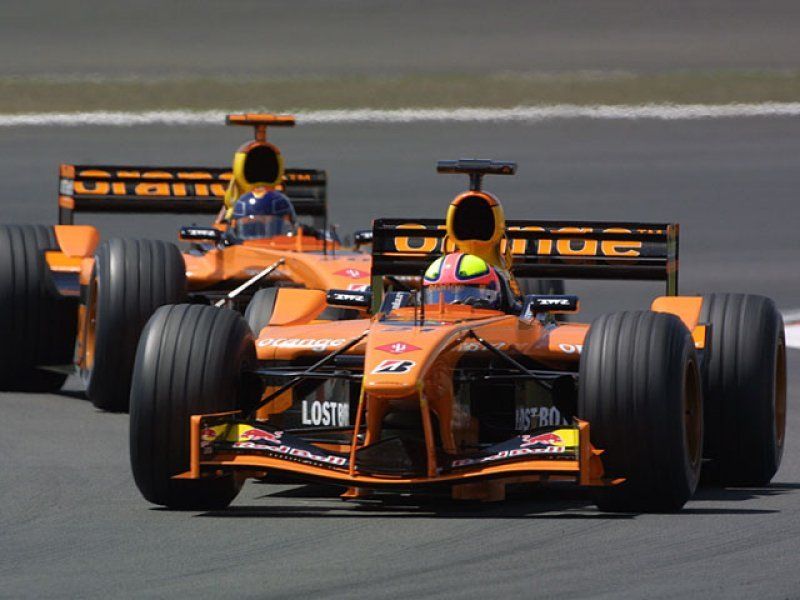
A few issue ago in MRA we ran a story on ambitious Australian F1 engineer Mark Preston’s plans to start his own Formula 1 team. A lot of people thought it was a beat up, but as the 2006 F1 season began in Bahrain, there was Mark standing on pit row looking at his dream come true.

The only diffrence was that, instead of the team being Preston Racing, with Mark as the principle, and with a major financial backer, it has morphed into Super Aguri F1, with major backing from Honda, including Honda V8 engines that were the equal of those running in the official Honda team cars – and with former F1 driver Augri Suzuki as team principle.

Team drivers are Takuma Sato and F1 rookie, Yuji Ide. Mark Preston’s role is listed as Chief Technical Officer. His job had been to start from scratch and to get a brand new F1 team onto the starting grid in what eemed an impossibly short period of time.

This issue of MRA had to go to the printers on the eve of qualifying day for the Bahrain GP, the opening race of the season. So we don’t know the outcome of the race as we write, but we had the chance to speak to Mark in Bahrain just two hours after he had arrived, on the Wednesday preceeding race weekend.

Miraculously, the team had been put together, cars built and the whole lot transported to Bahrain within 100 days of the chief designer arriving at the former Arrows factory in Leafield, England.

“We have three cars here – well, two and a half cars, catually,” a proud Mark told us. “Honda is doing the electronics and the computer code; they are doing quite a lot for us.”

But he wasn’t kidding himself of the cars performance. The team has been ablet to complete only 500 km of testing prior to the first race, compared to the more than 20,000km for the Honda team.

“We will be about six or seven seconds off the pace of the front runners. If Bridgestone turns out to be up with Michaelin, that might differ; we might get closer.

“But we don’t have anywhere near enough downforce yet. To short-cut the process of buidling a car, we started with the old A23, Arrows chassis from 2002. Legalising it to the 2006 regulations lost us 30 percent of its original downforce. Since then we have regained 10 to 20 percent after just three weeks in the wind tunnel at 12 hours a day. But we are still 25 percent down on the top guys, which we believe will be Renault.

“We have what we believe is the best engine on the grid, the latest wheels, brakes and tyres. Soon we also will have the latest Honda gearbox. The only real change to F1 cars in recent years is the use of MMC (lightwieght metal matric composites) in the suspension uprights. Ours still are the old style, fabricated in titanium. When we go to MMC we can save a bit of weight or trade the weight off for added stiffness.

“We have the latest crash structures, the latest radiators and cooling system. The biggest things where we are lacking is in the aerodynamics – the wings, side pods, top body, and the floor. That all just comes down to time in the wind tunnel. They are subtle things, but they all add up.

“Time constraints meant we had to start with the old car’s basic system, which includes the twin keel design; all the old stuff from 2002. And, even back then (when Mark was stress engineer with Arrows) we had to make compromises, so its a long way from perfect. We just didn’t have time to come up with an all new design. For example, we had to release the floor and top body in Janurary.

“The chassis is heavily modified from original. We had to modify it to suit the latest rear impact and side impact crash safety rules.

“When we goet the new gearbox, which will be soon, then the whol rear end of the car will be optimised. We will have new uprightsat hte same time, to go with gearbox. We will be adding as many aerodynamic changes as we can. We will upgrade the power steering – all the normal bits you do.

” Our electronics already are the latest possible; our control systems are the latest.

“We are still trying to decide if the old Arrows monocoque chassis needs to be changed during the year. We have paid a weight penalty by starting with the old chassis, but we figured it was better to spend our money and time on the aerodynamcis. We have aerodynamic updates coming in for each meeting as the year progresses.

“As far as reliability is concerned, we have only had niggly problems, mainly hydraulic leaks. We didn’t have a rig to test these things.

“We have done very little testing. Its been about 100 to 120 days from when we started to when we arrived here, depending on what you call the starting point. I know the chief designer only arrived at the team on the 28th November and it is the 8th of March today. That’s 100 days.

“Our Chief Designer is Peter McCool; I first met him when I was working at McLaren. I understand he left university and started in the McLaren aerodynamic department right away. He went to Reynard for a while, doing Formula 3 I think, and more recently has had his own composites company. In the last two years he has been doing contract work for both Toyota and McLaren F1 teams. He is mainly an aerodynamics person and packaging. These days you need an aerodynamics-biased person.

Asked how the Super Aguri F1 deal differs from Mark’s ambitious plans to own his own F1 team, he told us:

” The main things is that we have been able to do what we intended to do. But the difference is we are now doing it for Aguri, rather than for ourselves. But it’s a great situation we are in now. The great thin has been the satisfaction of planning how to do it and then doing it.

“Today, all the guys from the other teams are walking up pit lane and when they see us, they are saying, “My God; your’e here. Congratulations; that’s great!”

“The guys are amazed, although TV viewers probably won’t appreciate what we have achieved when they see us running around at the back of the field. But we just have to grin and bear it.

“Personally, I am in a better situation than ever before. I can make my own decisions. I follow my own philosophy now on how I want things done. I can finally do things the way I want to do them.

“Honda is putting a lot of effort in: the people there are incredibly supportive. In fact, I just had a call from Honda Japan, we are linked strongly to Japan rather than to the Honda team (formerly BAR) in England. For example, we just had a problem with some carbon fibre and we asked Honda to analyse it for us. It’s amazing have a car company ot call on.

“They don’t want us to be at the back, obviously. But they understand the task we have had. Right from day one, they kept saying, “Just focus on getting there. And now they are saying “Right; now the big task is done, lets get on with the next bit”. They don’t get too worried. They have been in motorsports for a long time and they know how it works. They are probably the best partner we could possibly have.

Don’t epxect miracles from the team in this first year; but as a team with an Australian connection, its better bet for fans to follow than was Minardi. It is well financed and has the backign of Honda, a company already at the pointy end of F1 with its main team and which wants this second Honda-backed team to be right up there as well.

Barry Lake, 2006

The Super Aguri / Preston Alliance

The only way this whole deal was possible was that Mark PReston had been working on assembling his own team for a couple of years. He already know what needed to be done, and which personnel he would need. He knew what all the carious problems were and he knew how he planned to appraoch them.

He had investigated the potential and availability of the former Arrows factory at Leafield, know what equipment was there and what needed to be added or updated.

Mark had the key people, designer, engineers, specialists in certain areas, all lined up ready to go. All he needed was the financial backers and he could press the “go” button and they were away.

When Aguri Suzuki came up with the deal to run the long-mooted second Honda F1 team it was late, very late. Under normal circumstances it was too late to even dream of putting together a team and designing and building a car for 2006.

Suzuki had to face the fact that it couldn’t be done; he was looking at 2007 entry to F1 – and that wasn’t what Honda or his backers wanted.

Then someone told him about Preston Racing.

Suzuki approached Preston, they talked, and a deal was done.

While Mark didn’t actually own his team, as he had planned, he suddenly did have the opportunity to run the tecghnical side of one as if it was his own – which is what he had wanted in the first place.

Mark wasn’t and isn’t driven so much by wanting to become as rich as Ron Dennis as he is by wanting to be his own boss, make his own decisions and to live by them. With Super Aguri he has that. And he probably has a better situation, for him, than if he did own the team.

But it never would have happened had he not made the big push to form his own F1 team and so to be hte “Johnny on the spot” when the big opportunity came along

By Barry Lake, 2006

More from Mark Preston (2006)

“We are looking for relibability first, then performance. We have asked Sato to concentrate on putting in a good lap in qualifying the to focus totally on finishing the race.

“The Honda team is probably in the top three, performance-wise, based on the winter testing. I think Renault is still the strongest. Honda should be with them somewhere, and the McLaren is fast. Toyota is not looking all that flash, neither is Red Bull or Williams, but we will see. Ferrari is an unknown because they always try to test separately. We just never know with them until the racing starts.

“In the early races particularly, it will come down to whose V8 engine is the best trade off between power and reliability.

“The vibration problems with the V8 engines have not caused too many problems for us, but then we only ran 500 km of testing; there might be things we don’t know about yet in that area.

“The best thing we can do in Bahrain would be to stay out of the way and finish the race. If we do that, everybody in F1 will be amazed. With this new qualifying format, anything could happen. Its all in the lap of the Gods.

“Everyone is saying that Sato is more relaxed than he has been in years. He has no pressure on him to perform; he just has to get around and finihs. Hw knows he’s not going to catch anyone.”

MRA 2006

Another Australian-owned Formula 1 team

This article was written by Barry Lake and was published in Motor Racing Australia 85, April/May 2005.

It’s a long way from a done deal, but most of the pieces are in place for a brand new Formula 1 teamto join the circus. And the man behind it is still-young Australian engineerwho has worked his way up from our local Formula Ford series, as Barry Lake reports.

Mark Preston isn’t an as-tough-as-nails businessman in the mould of ProDrive’s David Richards, who until recently held the reins at BAR-Honda, or Tom Walkinshaw, who owned the Arrows Formula 1 team, or even Minardi’s Australian owner, Paul Stoddart, for that matter.

Neither is he a sometime racer turned single-minded team owner like Frank Williams or Eddie Jordan. If you had to liken Preston to any one of the very individualistic F1 team owners, you might start with Ron Dennis. But then, that isn’t him, either.

What you start to realise is that none of these men is like another. They all are individuals with little in common other than that single-mindedness and a passion for Formula 1 motor racing.

This clean-cut, quietly-spoken 36 year-old Australian engineer has his sights set on emulating, in his own way, the career of McLaren’s Ron Dennis, who worked his way up from being a race mechanic to owning one of the most successful Formula 1 teams in the sport’s history.

Motor Racing Australia – No. 85

But he wants to add a bit of Ferrari to the blend, as well. Preston believes that people are what an F1 team is all about, but they have to more than just the best at what they do, they also need to be happy in their work, and focussed on their jobs, rather than on internal politics. Although his background is in engineering, Mark now is studying business at Oxford, the highest ranked business school in the United Kingdom and among the best in the world, at the same time as he is pulling together his team.

This isn’t just a pipe dream. Preston already has all the key people lined up, some ready to go, some already working with him. He has been mentally noting the people he wants to have around him throughout the years he has been in F1. And he has the option of moving into an already-established – and currently unused – purpose-built F1 factory. All he needs is the financial backing.

That’s the hardest part, although Preston already has some experienced financial people on board and he is working tirelessly, scouring the entire world for a company that can really benefit from the exposure they would get by backing an F1 team.

Getting a spot on the F1 grid isn’t a problem. The series was structured, years ago, around having a grid of 24 cars – a total of 12, two-car teams. At the moment there are only 10 teams, that’s 20 cars, racing. F1 supremo Bernie Ecclestone has been waiting for years for someone to come along and fill the extra two spots.

MRA 85, Another Aussie F1 Team?

Last year, when Preston first decided to go for it, he could see three rivals already vying for the two spots. Since then, they have been removed from the equation completely, because all three have moved into existing teams. One, a Russian business man, has joined forces with Carlin Motorsport and purchased the Jordan F1 team. Another, the Austrian owner of the Red Bull sports drink company, has bought what was the Jaguar team. And Christian Horner, the 31-year-old who was well advanced with plans for a team of his own, has accepted the job as team manager for the new Red Bull F1 team.

That’s not to say that new rivals won’t spring up out of the woodwork in the near future. But, for the moment at least, Mark Preston’s is the only group (as far as he knows) currently working towards creating a new F1 team, and there are two spots up for grabs. His operations manager is Kevin Lee, who joined TWR in 1979 and was general manager through their Le Mans-winning Silk Cut Jaguar days. He later was responsible for sorting out financial problems at Benetton and Arrows F1 teams and took part in the formation of the Toyota F1 team.

Michael Boon, finance and business services, also was with the TWR Jaguar program and was in F1 for eight years with Benetton (now Renault).

Chief designer Paul Bowen has 17 years experience in F1, originally as chief designer at Arrows, later head of mechanical research at Ferrari, on both occasions working directly with Ferrari’s current technical director, Ross Brawn.

Composites design is taken care of by Dr Robert Neumann, who was a design engineer at Arrows, and now has his own company.

Brand development is in the hands of Paul Balaam, who has 20 years in the marketing industry in UK, Europe and USA.

Warwick Marx, who provides strategic management consultancy, has had a 15 year career with companies in USA and Australia in professional engineering and business management.

Other key personnel can not be named because they are currently working in other jobs until needed by Preston Racing on a full-time basis.

Preston has assembled a team that is poised and ready to take on any project and already the team has worked on some racing projects. They can take on anything right up to a full F1 attack at short notice, depending on what a financial backer wishes to achieve.

They are constantly monitoring the Fl situation to keep pace with developments, but Preston realises that a backer might want to try something a little less daunting before launching into F1. To this end, and having members on the team who have twice been on the winning team in the Le Mans 24 Hour Race, they have analysed the requirements for winning the race again. It is possible, says Preston, but no pushover. A serious attack on Le Mans would have to be a three year project, he says.

Realising that Preston Racing as yet has no real track record as a company, Mark knows they might have to do something spectacular to demonstrate their capabilities. The team has designed what they call the Preston Racing Track Car, or PR-TC for short, a “new technologies demonstrator”. They are keeping the design under wraps at the moment, planning to save the visual impact until the time is right for maximum exposure for any company that might wish to back the project.

The Preston Racing team: Mark Preston, Michael Boon, Kevin Lee, Dr Rob Neumann, Paul Balham.

But we can tell you that the track car is based on a Formula 1 car (a one-year old car, which they would buy from one of the teams) with full sports car bodywork, and the plan would be to attack the long-standing outright lap record for the world famous original North Loop of the Nurburgring road circuit in Germany. After that, it could be a show car, displayed world wide at motor shows and racing car and engineering shows, to promote both the sponsor and Preston Racing.

While undertaking all of this and searching for companies that can benefit from their involvement with Preston Racing, Mark spends one week in every two months studying for a Master of Business Administration degree at Oxford Business School. It has the dual benefit of developing Mark’s already impressive business skills, as well as putting him in the company of a lot of important people in big business from all over the world who are there to prepare themselves for the final move to upper level management. Many of them, including some of the lecturers – are excited and enthused by Preston’s plans.

Mark Preston can’t put his finger on exactly what triggered his interest in motor sport. He remembers that, as a young boy, he always used to watch the big Bathurst touring car race on TV every year, and that his grandfather, who owned a motor wrecking business, was “into cars”.

Mark also says his appetite was whetted by this writer’s stories in Modern MOTOR in the late 1980s of our Datsun 1600 club motor sport car. He told us, “I actually went out and bought a Datsun 1600, although I never got around to competing in it.” His main interest was in the engineering side, so he concentrated on completing his school studies and following this with a mechanical engineering course at Monash University in Melbourne.

“I found the uni course was very theoretical and, although I obviously wanted to learn the theory, I was anxious to get some practical experience,” remembers Preston. So he asked around the sport if anyone could steer him towards someone in Australia who was building his own racing cars. He was directed to Mike Borland, designer and manufacturer of Spectrum Formula Ford racing cars.

It was 1988 and Borland had built one Spectrum 04, but was busy race engineering a Formula Holden for Mark Skaife, who won the Australian Drivers’ Championship that year.

“When I first went to see Michael and told him I wanted to design racing cars, he gave me some chassis information and told me to go away and draw up some roll centres. So I went home and did that and went back with them the next day. He looked surprised when he saw me, and said, “Oh; you’re back again. Most people don’t come back…”

So Mark was on the team – part time. A customer had bought one of Borland’s cars and Borland ran it for him at race meetings, with Mark as one of his crew. As well as helping at the race meetings, Mark was given various projects by Mike to work on, largely those that could benefit from the time Mark was prepared to put in on the computer.

Being keen and inventive, during the period that Borland was designing his Spectrum 05, Mark would come up with various ideas of his own and go back to Mike saying, “Hey, what about this…” and Mike would, more often than not, reply, “We’ve tried that; it doesn’t work.

Mark even wrote his own computer simulation program, so he could simulate what a car would do around a circuit with certain modifications to its set-up. Then, when the car was tested at the track, if it did better or worse than the simulation suggested, he would have a direction in which to head in a quest to learn why the changes did or didn’t work.

He called the program Dynamic Response and has continued to update it and still offers it via his web site today.

Preston finished his university degree in 1991 and eventually took a job as project engineer at Holden Special Vehicles. As well as working on various projects for HSV, he also was drafted in to do some for Holden – including adapting a two litre engine to the Holden Commodore intended for sale in South-East Asia. He continued to work with Borland on the side, and went with him to the race meetings.

But Mark wanted to be full-time in the business of designing and building racing cars. By 1995 he realised that Borland wasn’t going to sell enough Formula Fords in Australia – against the then top-selling British Van Diemen cars – to be able to employ Mark full time. So he put together a proposal and set off to Malaysia to try to sell the motor sport people there on the idea of starting a series by buying Spectrum Formula Fords.

The man he was directed to talk to was the father of the yet-to-be racing driver Alex Yoong, then a wealthy real estate developer and a big wheel in Malaysian motor sport circles. But Mr Yoong was unimpressed with a proposal from an Australian manufacturer who had built only a few cars and hadn’t yet won anything of note. He implied that if Mark was representing a European manufacturer with a good track record, he might be interested.

Mark decided then and there that he would have to go to England if he wanted to be a racing car designer on the scale that he was envisaging.

“When I said to Michael I was going to go to England we talked about it and decided, ‘Let’s do one more year and do everything we’ve talked about; own the car ourselves; run the team ourselves.’ So we went halves in the cost of the car, and we got Jason Bargwanna as the driver

That was 1996 and Jason finished second in the championship, behind David Besnard.” At the Oran Park round of that series, Preston was talking to the writer of this story and said he was planning on going to England, did I have any ideas on who he should be talking to about a job, where to live and other such things.

I had only a little earlier been talking to experienced race engineer, recently returned to Australia, Bruce Cary and suggested that he would know. I found Bruce, introduced him to Mark and Bruce said, “How old are you?” Mark told him he was 27, he would be 28 in a couple of months, and asked why he wanted to know.

Bruce said, “If you’re less than 28 years old you can get a two year working visa for Britain, but once you’ve turned 28 they don’t want to know you. “Mark fired into action the next day. Over the next few weeks he organised his visa, gave his notice at HSV, and soon was on his way. He arrived in England on the 26th of October 1996, 12 days before his 28th birthday.

At about the same time Chris Dyer, an electronics engineer with the Holden Racing Team and a friend of Mark’s, also was considering going to England. Their impending departure inspired Blake Arrowsmith, then building engines at HRT, to follow suit. Dyer now is race engineer with Michael Schumacher at Ferrari, so has a few world championships under his belt, and Arrowsmith now is an engineer in the engine department at Toyota F1 in Cologne.

But back then, in late-1996, they all scored jobs at the Arrows Formula 1 team. It was coincidental that Tom Walkinshaw, who owned Holden Special Vehicles, had just bought Arrows. The real reason they got in at Arrows was that Walkinshaw moved it tonew premises in a different area and some of the staff decided not to stay on, and Tom was planning on increasing the staff anyway so, as luck would have it, there were plenty of jobs on offer just as the Aussie trio arrived on the scene.

Mark worked for Arrows for six years, beginning in stress engineering, which he did for a year, and he then became ‘senior vehicle performance analyst’.

“That was a position created for me, rally. I had asked if we could do vehicle dynamics in the stress analysis department. I wanted to carry on with simulation, so I was put in charge of that. For the last eight months that I was there I was head of R&D and of the test team as well. R & D covered almost everything from stress analysis to vehicle dynamics, and the laboratories, which included the four-post rigs, gearbox rigs, and crash testing. So they put the test team in with R&D, and we effectively had the whole area. It was a good set-up, really; very efficient. The test team mechanics, when they were not away testing, could help out on the test rigs etc. It was great fun; I had so much variety there. I loved every minute of it.”

But then Tom Walkinshaw got into financial trouble and Arrows was caught up in the bankruptcy of most of his group of companies. Mark was “shattered”. “That job was everything that I had always wanted to do. And it was better than it could have been in a bigger team. Arrows didn’t have as much money as the big teams, so we went away testing only half as often as the rest of them did. So we didn’t travel as much, but what it meant was that we spent a lot of time back at the factory, and we had the time to do research there that we couldn’t have done if we’d been away testing all the time. It was the perfect loop.

“The first year that we did it that way, I thought it was a lot more efficient than when we had done twice the test miles the previous year. And when we did go away testing, with just one car instead of two, and with only four test days available, we were more focussed, and more organised. Arrows had a computer simulation program that was great for combining the test results with what we learned back at the factory.”

It was about August 2002 that the team collapsed and disappeared from the Fl grids. Mark had seen it coming and had begun looking around and going for job interviews. He started with McLaren only 16 days after he left Arrows – and that break was only to comply with legal requirement in my contract.

His first job at McLaren was “principle designer, structures”. “I dropped quite a bit in the breadth of the work I was doing. It involved composite design, stress analysis, crash testing, and the laboratory (four-post rigs). It was still fairly broad, but not the complete loop I’d had at Arrows.

“I was at McLaren from August 2002 to June 2004, slightly less than two years. I left, in the end, mainly because, after everything went wrong with the MP4-18 car in 2003, they changed everything within the organisation. Everyone’s jobs were broken down a lot more. When I first went there they wanted to have four principle designers, but now they divided it between eight designers. At that point I decided McLaren wasn’t the place for me for the rest of my life.

“At McLaren you’re just a cog in a huge machine. If I was English and I had a wife and kids and a mortgage and just wanted a job to pay the bills, I think I could have learned to be content with the situation there. But I wanted to go further than that. I could see that I would never be technical director at McLaren, in charge of the whole thing. And yet it was one of the biggest and best teams in the business. There was nowhere else to go – nowhere that would have the situation or possibilities I was after, anyway. I had reached a point where I could either go back to Australia – and I couldn’t think of anything there that I really wanted to do – or I could get on with something else that was going to offer me the challenge and the fun that I was looking for.

That “something else” was to start a Formula 1 team of his own.

As Mark says, “I am pretty much hooked on F1, because it is the pinnacle of motor racing.” It is his confidence, his total lack of doubt, that reminds you of a young Frank Williams, a Ron Dennis, or an Eddie Jordan – all of whom started with nothing and built their own F1

Asked if he is in any way daunted by the prospect, Preston answers, “No, not really. If it’s the same as everything else I have done along the way, it shouldn’t be too much of a problem. Everything else I’ve done has been just a matter of keeping on bashing away at it until it happens.”

Driving Autonomous Innovation: Mark Preston Discusses StreetDrone’s Progress at Cenex Expo

Mark Preston of StreetDrone shared exciting advancements at the Cenex Expo. He detailed future plans in vehicle autonomy. These plans focus on industrial and logistics environments. The conversation centered on StreetDrone’s successful work at Nissan’s Sunderland plant. The company transitioned from their 5GCal project to a newly funded endeavor. This new project is focused on scaling and commercialisation.

Scaling Autonomy in Real-World Industrial Settings

Preston highlighted that StreetDrone is expanding its autonomous fleet from initial trials to four operational trucks within the Nissan facility. These trucks are tasked with moving goods throughout the site. The real innovation, according to Preston, lies in targeting environments like factories and ports. This includes upcoming deployments at the Port of Rotterdam. These environments have private roads and controlled speeds, which allow for faster, safer commercialization of autonomous technology.

From Proof of Concept to Commercialization

The proven success at Nissan opened doors for StreetDrone to secure new projects abroad. Preston emphasized that areas like industrial logistics and port operations are the most immediate opportunities. They are viable and revenue-generating in terms of autonomy. This places StreetDrone among the UK’s leading players in this space.

Collaborating for Scale and Future Growth

The interview concluded with Preston stressing the importance of partnerships, industry collaboration, and continued outreach. StreetDrone is engaging with potential customers at events like Cenex. They also connect with industry supply chain partners. By doing so, StreetDrone is positioning itself at the forefront of commercializing autonomous vehicle technology for logistics. They are also focusing on industrial use cases.


Navigating Speed, Strategy & Innovation in Motorsport and Beyond

In this in-depth conversation, Mark Preston discusses his career at the forefront of motorsport and mobility innovation. He talks about his engineering roles at Arrows and McLaren. He also discusses founding Super Aguri F1, winning titles in Formula E, and pioneering autonomous vehicle technology at Oxa. The discussion explores leadership, strategy, marginal gains, AI, and building high-performance teams.

Conversation Highlights

In a wide-ranging discussion, Mark reflects on a career defined by pushing the boundaries of engineering, leadership, and innovation. His journey spans from the racetrack to autonomous technology. He began as a simulation and stress engineer in Australia. Later, he moved to the UK to pursue his Formula 1 dream. He eventually worked with Arrows and McLaren. A turning point came when he shifted from pure engineering to business leadership. He founded Super Aguri F1. He later achieved championship success in Formula E with DS Automobiles and now Lola & Yamaha. Throughout, the constant has been a deep commitment to learning, experimentation, and building high-performing teams.

Motorsport is an unparalleled arena for decision-making under pressure. Mark highlights that performance is tested every two weeks. Even small wins, like optimising pit stops or improving team communication, compound into success. Drawing from experience at McLaren, he emphasises the importance of institutional memory. He stresses the need for scientific rigour and structured processes over black art intuition. He also discusses how strategic clarity is critical in racing. Iteration is also vital. Scenario planning helps build resilient, innovative organisations across sectors.

Beyond motorsport, Mark shares insights from his leadership at Oxa. He is applying engineering knowledge to autonomous vehicles in ports and logistics. His focus remains on practical, scalable use cases — leveraging off-highway environments and deep software integration. AI and machine learning reshape both racing and autonomy. Mark combines technical depth with organizational clarity in his approach. He continually strives to stay on the “bleeding edge” where no one has the answers — yet.

Key Timestamps

  • 00:00 – Introduction & career overview
  • 04:15 – Lessons from McLaren & Arrows
  • 10:30 – Leadership in high-pressure environments
  • 17:45 – Marginal gains & small wins
  • 27:20 – Transition to autonomous vehicles
  • 38:10 – AI & machine learning in motorsport
  • 47:00 – Scenario planning & strategy

Follow My Work

To keep up with my latest work in motorsport, autonomous vehicles, and innovation, connect with me on LinkedIn or explore more projects at www.MarkAndrewPreston.com.


Mark Preston on the Rise of Formula E: A Chat with the CEO of DS TECHEETAH

In a recent interview, Mark Preston, CEO of DS TECHEETAH Formula E team, shared insights into the world of electric Motorsport and the strategies driving its growing popularity. From its unique approach to fan engagement to its commitment to sustainability, Formula E is carving out a distinct identity in the racing world.

From Engineering Roots to Leading a Formula E Team

Preston’s journey in Motorsport began with a hands-on approach during his engineering degree. He started by manufacturing motor racing cars and working with Formula Fords. Encouraged to join F1, he moved to the UK and worked his way up at Arrows Grand Prix and McLaren before starting his own Formula 1 team with Aguri Suzuki and Honda. This diverse experience paved the way for his leadership role in Formula E.

Formula E: Racing Reimagined

Formula E distinguishes itself from Formula 1 in several key ways:

  • Electric Power: As the only fully electric racing sport, Formula E champions sustainability.
  • Urban Landscapes: Races occur on city centre street circuits, bringing the action to fans.
  • Sustainability Focus: Formula E is the first sport to be Net Zero since its beginning, offsetting all logistics and emissions.
  • Fan Engagement: Innovative features like Fan Boost and Attack Mode create an interactive and exciting experience for viewers.

Fan Engagement: Getting Closer to the Action

DS TECHEETAH employs several strategies to build and maintain fan engagement:

  • Behind-the-Scenes Access: Allowing increased filming in pit lanes and garages.
  • Fan Boost: Enabling fans to vote for their favourite driver and give them a temporary power boost.
  • Attack Mode: Introducing a gaming element with strategic power boosts.
  • Experimentation: Embracing new ideas to enhance the fan experience.
  • Focus on Experience: Creating excitement and helping fans understand the drivers’ and teams’ stress levels.
  • Social Media: Using platforms like Twitter, Instagram, and LinkedIn to connect with fans on different levels.
  • Esports Partnerships: Collaborating with partners like Marley to engage fans through Esports.

Sustainability: A Core Value

Formula E’s commitment to sustainability is evident in its Net Zero status and efforts to reduce single-use plastics. This resonates with a younger audience that is increasingly conscious of environmental issues. The series also attracts sponsors who want to align with green initiatives and tell stories about electric vehicles and renewable energy.

Looking to the Future

Preston envisions a future where Formula E continues to lead the way in sustainable Motorsport. He highlights the importance of thinking five to ten years ahead to shape the future of electric car technology and fan experience. By experimenting with new formats and technologies, Formula E aims to remain at the forefront of innovation and continue to excite fans.

Motorsport Passions

Mark Preston, currently the Motorsport Director at Lola Cars, shares his inspiring journey in the racing world. From his early days working with Formula Fords in Australia to leading teams in Formula 1 and Formula E. His passion for motorsport has been a constant throughout his career, driving him to innovate and adapt to new challenges. He discusses his latest venture, bringing Lola Cars back to motorsport after a decade, in collaboration with Yamaha, to compete in the next Formula E season. Preston highlights the excitement of this project, describing it as an opportunity to push the boundaries of electrified motorsport while forming a new team dynamic with engineers, drivers, and partners.

Throughout the interview, Preston emphasizes the importance of passion, perseverance, and collaboration in motorsport. He shares insights into the challenges of pioneering in Formula E, the benefits of electrification, and the technical evolution of racing. Mark also parallels motorsport and other industries, illustrating how marginal gains, teamwork, and innovative thinking can create impactful outcomes. With his eyes set on the upcoming Formula E season, Preston’s enthusiasm for driving progress, both on and off the track, underscores his commitment to advancing motorsport technology and fostering a culture of excellence.

The first race for Lola in over a decade at São Paulo Fórmula E

Experimenting with AI for creating a Podcast

As you all well know, AI tools are moving forward at a great rate of knots, so its worth saying that this post is being created in Oct 2024, because this might be out of date in months if not weeks!

If you haven’t had a try of Google’s NotebookLM, its definitely worth experimenting with.

In this particular case, I’ve taken all the publicly available Podcast that I have appeared on (links on the site), and have uploaded them all into a “notebook”.

Podcast automatically created by Goolge NotebookLM

The transcriptions from YouTube videos were used as input for the NoteBook, along with direct transcriptions from the podcast. When direct transcriptions were not possible due to the podcast being aired on a different platform like Spotify.

How to become an F1 Technical Director

🚀 Thrilled to share my journey in motorsport through the “How to Become an F1 Technical Director” interview. I reflected on my transition from a mechanical engineer in Australia. This journey led me to work with some of the top teams in Formula 1 and Formula E. It has been an incredible experience.

The key takeaways for anyone pursuing a motorsport career are important. 💡 Specialization matters—find what you’re passionate about and excel in it.
💡 Adaptability is crucial—the road is rarely straight, but you can navigate the twists and turns with the right mindset.
💡 Don’t be afraid to take risks. The opportunities that seem uncertain may shape your career the most.

I started my journey with Arrows Grand Prix. Then, I worked with McLaren Racing. Now, I am leading at Lola Cars. I’ve learned that persistence and passion are key ingredients to success. Excited to see what’s next as we gear up for another exciting Formula E season! ⚡

#Motorsport #Formula1 #FormulaE #Leadership #CareerAdvice #Engineering #Innovation #F1TechnicalDirector


Lucas di Grassi and Zane Maloney exit pit lane in the São Paulo race with Lola Yamaha ABT Formula E Team

24 Great Truckin’ Songs

In 1976 I was 8 years old, living on a farm in Kiacatoo, outside Condobolin in central New South Wales, and… into trucks. For Christmas that year I was given my first LP: ’24 Great Truck Drivin’ Songs’. It even had CB Trucker Talk code words on the back to decode the “secret” trucker talk, and this led me to build myself a side band radio to listen to the truck drivers in the vicinity!

Being on a farm in the wheat country meant a lot of trucks and I would often be found sketching ‘18 wheelers’ (see CB code for a 5-axle truck) with chrome and spotlights adorning the cab and bull bars. We would often go to the Farm Days in local towns to check out equipment with my dad and uncle to see what new ideas were available and admire the shiny rigs and monster tractors that are common in the outback of Australia.

Image source: http://www.discogs.com

Each year in the harvesting season, when not in school, I would join my dad and grandfather on the trip to the grain silo in the centre of the town, about 30 miles away. We would carry around 10-15 tonnes of wheat in each load.

My dad remembers his favourite story of me being an earnest young man. He was driving the F600 with a dog trailer fully loaded with 13 tonnes of grain, from the farm to the wheat silo in Condobolin.

Pictured: My father with the multi-purpose F600 Ford with a 500 gallon tank with optional tipping tray and cattle pen

Given the angle of the truck on a crossroads, he asked me if there were any cars coming.

I replied: “No cars.”
So he set off changing through the gears of the 8-speed gearbox with the fully loaded truck.  

“But there is a truck”, I said literally

“£(%*£@£(£*£!@”, was the reply…
But we made it to the silo and he learned to ask very literal questions from then on.

Fixing the Staines Truck

One school holiday my cousins and I decided to fix a truck to keep us busy. We found an old Comer truck pictured below, that my uncle had taken the crane off the back and onto a new truck chassis. The old Comer had stood around for many years and was not operational.

Over the next few days we would walk into my uncle’s shed and ask how things worked. After vacuuming out the spiders and ants we tried to start it with the keys that were in the ignition. No joy.

First question: How do engines start?

“You will need some fuel and a battery.”  

“How does a battery work and why would this one be broken”, we pointed to the truck battery we had brought into the main workshop. “Be careful with the battery acid.” 

After learning about the water in a lead acid battery and hooking it up for the night on a trickle charge we left to create makeshift seats out of bean bags and a chair for the driver!

Next, the fuel tank

Next was a fuel tank, as you can see in the picture, a 44 gallon drum, NOT strapped down to the chassis! We had to learn how to prime a fuel pump and then finally, bump start the truck with a tractor. Oh, and I think we also had to learn how to drive at the same time, as there were multiple jobs to be done!

Pictured: Mark in the driver’s seat with sisters and cousins

As we sped past the main shed, my uncle looked out and noticed that not only did we not have the fuel tank strapped down, but we also had an exhaust which did not have a muffler, and in the middle of Australia, that is how bushfires get started!

All good fun!

Pictured: Tractor used for bump starting our truck adventure

From driving to designing

After university, I started work designing dangerous goods trails for a company called Tieman in Melbourne. My first vehicle was a hydrogen peroxide tanker, my first experience at designing a Class A pressure vessel. The second one was a bitumen tanker. I really enjoyed that experience as I travelled around with some of the truck drivers understanding what they – as the customer – really needed and made updates to the design of the tanks accordingly.   

Pictured: Tieman bitumen tanker

Little did I know that I would get back to trucks through a career in Formula E and Formula 1 and bring that technology to the autonomous trucking industry with StreetDrone. StreetDrone is pioneering the commercialisation of yard logistics in the trucking sector with our highly successful project at Nissan’s Sunderland plant where we work closely with Hitachi Vantec, Nokia, BP, and the North Eastern Automotive Alliance. I’ve come full circle, only now with technology that we couldn’t have imagined in the 70s, like teleoperation, electric powertrains and, of course, autonomy.